Delivery Australia Wide
 Award Winning Irons
 Professional Iron For Home Use
 Established Over 40 Years
Is a Laurastar Worth the Money? An Honest Answer for Serious Buyers
- A Laurastar Lift Xtra Titan costs roughly $1.20 per day over its 10-year lifespan, less than most people spend on a daily coffee, and before dry-cleaning savings are factored in.
- DMS (Dry Microfine Steam) is a physically different technology to standard steam: it penetrates fabric without saturating it, producing dry, crisp results that standard irons (including premium Miele and Philips models) cannot replicate on delicate fabrics.
- Owners with 10-plus years of use consistently report that the price objection disappears within the first few weeks. The ProductReview.com.au rating across hundreds of reviews is an almost perfect 5.0 stars.
- A Laurastar is not the right purchase for everyone. But for anyone who owns silk, cashmere, wool, or linen and currently relies on a dry cleaner for those pieces, it is very likely the most cost-effective long-term solution.
$1,399 is a lot for an iron. Say it out loud and it sounds absurd. This article won’t try to talk you out of that reaction. It will show you exactly what that number buys, how it compares to the alternatives you’re already paying for, and what long-term owners say after years of living with the decision. Three arguments follow: the cost model, the technology, and the evidence. Skip to whichever matters most to you.
Does the Cost of a Laurastar Actually Make Sense?
Yes, once you account for lifespan and dry-cleaning replacement, the maths shifts significantly. Here’s how it breaks down.
What Does $1.20 a Day Buy You?
The Lift Xtra Titan retails at $1,399. Laurastar designs its systems to last 10 years, not as a marketing claim, but as a function of Swiss manufacturing standards, full repairability, and maintained spare parts availability throughout the product’s life.
Divide $1,399 by 10 years and you get $140 per year, or roughly $1.20 per day. That’s less than most people spend on a daily coffee, and a fraction of a monthly streaming subscription.
That number doesn’t yet include what the machine replaces.
How Much Are You Spending on Dry Cleaning Right Now?
Three dry-clean visits a month (a silk blouse, a wool blazer, a linen dress) runs $45 to $75 per visit at most dry cleaners, or $540 to $900 per year at the conservative end. For anyone dry-cleaning five or more pieces a month, the annual spend climbs well above $1,000.
At $540 saved per year, a Laurastar recoups its purchase price in under three years and continues running for seven more. At $900 saved, you’re at breakeven in under two. The machine doesn’t depreciate on a shelf. It replaces a recurring cost.
One long-term owner on ProductReview.com.au put it plainly: “Expensive? Yes. Regrets? None.” That’s Lolver23, a verified reviewer with years of ownership behind the comment.
How Does the Laurastar Cost Compare to Replacing a Standard Iron?
This is the comparison most buyers don’t make, because it requires thinking about appliances differently. Most premium steam stations (Miele, Philips, Rowenta) cost $400 to $900 and have an average replacement cycle of 3 to 5 years.
| Laurastar Lift Xtra Titan | Premium Steam Station | |
| Purchase price | $1,399 | $400–$900 |
| Expected lifespan | 10 years | 3–5 years |
| Replacements over 10 years | 0 | 2–3 |
| Total 10-year cost (hardware) | $1,399 | $800–$2,700 |
| Fully repairable? | Yes | No |
| Dry-cleaning replacement capability | Yes (silk, cashmere, linen, wool) | Partial (silk risk remains) |
At the high end of replacement costs, a standard steam station cycle actually costs more over 10 years than a Laurastar, on a product that still can’t safely handle your most expensive garments.
What Does DMS Technology Actually Do Differently?
DMS (Dry Microfine Steam) is a physically distinct steam system. It is not a marketing term for “better steam.” It describes a different mechanism.
How Standard Steam Irons Work (and Where They Fall Short)
Standard steam irons (including most premium models) produce wet, pressurised steam. That steam saturates fabric fibres on contact. For cotton shirts and polyester blends, that’s fine. For silk, cashmere, and fine wool, the moisture saturation causes two problems: sheen marks from direct plate contact, and fibre stress from moisture absorption and heat combined.
This is why silk blouses come back from a standard iron looking worse than before, and why so many expensive garments go straight to the dry cleaner rather than risk the board.
How DMS Works Instead
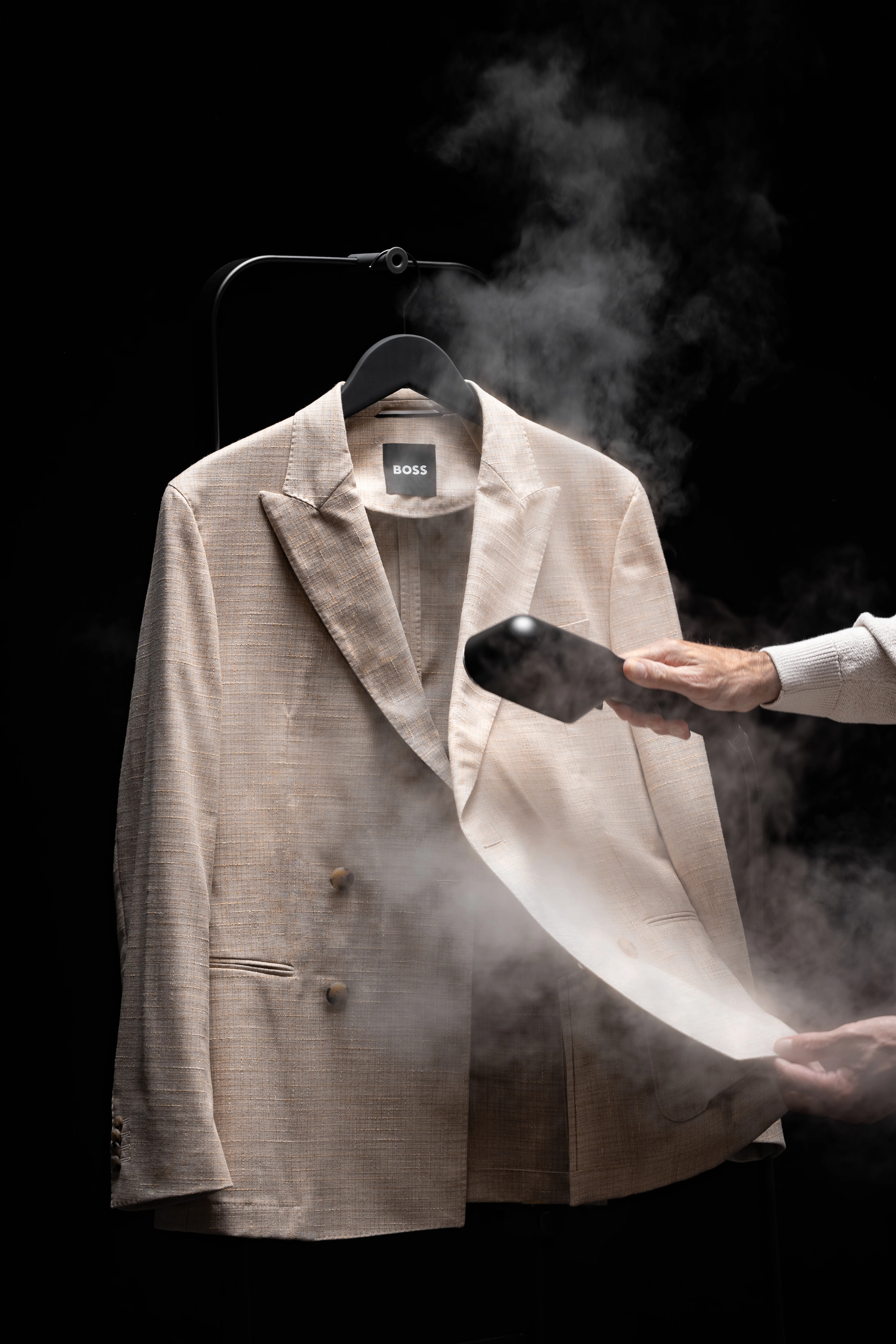
DMS produces dry, microfine steam particles that penetrate fabric at a fibre level without depositing moisture on the surface. The result is garments that come off the board dry to the touch and structurally crisp, the same result a dry cleaner achieves through professional pressing, but without chemicals or the round trip.
On a silk blouse, the difference is visible within seconds. The fabric lifts, the fibres relax, and there’s no sheen, no damp patch, no residual moisture. Run your hand across it after a standard iron and it’s faintly warm and slightly damp. After DMS, it’s bone dry. That’s the result most people have to see in person to believe, which is why Laurastar’s Sydney, Melbourne, and Perth showrooms exist.
What Does the Active Board Add?
The Active Board uses a vacuum and blower system to achieve three-dimensional garment structure, not just surface smoothing. The vacuum draws fabric tight against the board surface. The blower releases it crisp and structured.
For a shirt collar, a trouser pleat, or the shoulder of a structured jacket, this produces results that simply aren’t possible on a standard flat board. It’s the difference between ironing a garment and finishing it.
What Do Long-Term Owners Actually Say?
The evidence from real owners is unusually consistent for a product at this price point.
Laurastar’s Lift Xtra Titan currently holds a 5.0-star rating across 48 reviews on ProductReview.com.au. These are not early-adopter reviews. A significant number come from owners with 10, 13, even 16 years of use. The consistent themes across reviews include:
- Fabric results on silk and cashmere exceeded expectations
- The dry-cleaning bill dropped significantly or disappeared entirely
- The product performs identically years later to how it performed on day one
- Several owners bought a second unit for a holiday home
The Lolver23 review, “Expensive? Yes. Regrets? None.”, is the most concise summary of the ownership experience in the dataset. It’s not an outlier. It’s the pattern.
How Does Laurastar Compare to Miele?
For most fabrics at standard ironing temperatures, a well-maintained Miele steam station delivers solid results. That’s a genuine acknowledgement, not a setup. Miele makes good appliances.
The gap opens on delicate fabrics: silk, cashmere, fine wool, and linen. Here, the difference in steam technology produces a measurable difference in outcome. Miele’s wet steam system carries the same saturation risk as other standard steam stations. Laurastar’s DMS does not.
| Laurastar Lift Xtra Titan | Miele Ironing System | |
| Steam technology | DMS (Dry Microfine Steam) | Standard pressurised steam |
| Safe on silk | Yes | Risk of sheen/moisture marks |
| Safe on cashmere | Yes | Risk at higher temperatures |
| Expected lifespan | 10 years | 3–5 years (typical) |
| Fully repairable | Yes | No (replace unit) |
| Price | $1,399 | $400–$900 |
| Active Board system | Yes | No |
If your wardrobe is primarily cotton business shirts, a Miele is a reasonable appliance. If it includes silk, cashmere, linen, or fine wool (the fabrics that send most people to the dry cleaner), the Laurastar’s technology addresses a risk the Miele does not.
The Time Argument: What $1,399 Buys Back Each Week
The cost-per-day calculation above covers the financial case. There’s a second dimension worth considering: time.
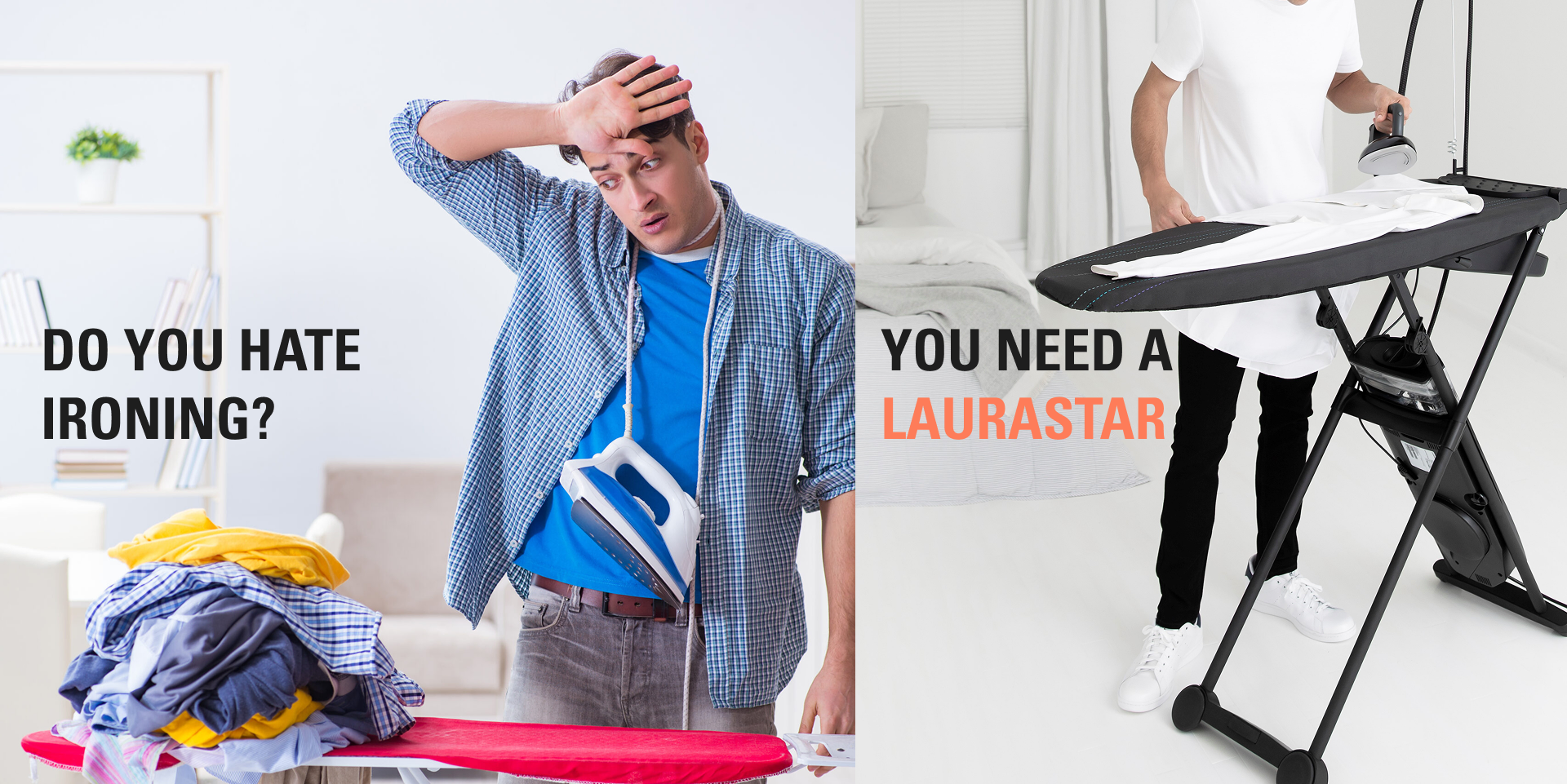
The average household ironing business attire at home spends 1.5 to 2 hours per week with a conventional iron. The same load on a Laurastar takes 35 to 50 minutes. Over a year, that’s roughly 40 to 60 hours returned.
| Garment | Conventional iron | Laurastar |
| Dress shirt | 8 min | 2–3 min |
| Trousers | 7 min | 3 min |
| Suit jacket | 6 min | 2 min (vertical steam) |
| Silk blouse | 8 min | 2 min |
| Linen shirt | 10 min | 4 min |
The time saving comes from DMS steam penetrating fabric fibres on the first pass. A conventional iron requires multiple passes over the same area to relax the fibres fully. Laurastar’s high-pressure steam does it in one.
For someone ironing 10 to 16 tailored pieces a week, the time argument is often more persuasive than the cost argument. $1,399 spread over 10 years is abstract. Getting an hour back every week is immediate.
The Three Appliances You Are Already Paying For
Most buyers compare a Laurastar against a single iron. The more accurate comparison is against three separate appliances it replaces.
A Laurastar system functions as a high-pressure steam iron, a garment steamer, and a hygiene system in one unit, using DMS steam that reaches temperatures eliminating up to 99.9% of bacteria, dust mites, and allergens embedded in fabric. Buying each function separately looks like this:
| Appliance | Price (AUD) |
| Quality conventional iron | $150–$300 |
| Quality garment steamer | $150–$300 |
| UV or antibacterial fabric device | $200–$400 |
| Three appliances combined | $500–$1,000+ |
| Laurastar Lift Xtra Titan | $1,399 (10-year lifespan) |
The overlap in purchase price is narrower than it looks once the 10-year lifespan is applied. Three mid-range appliances replaced every 3 to 5 years cost $800 to $2,700 over ten years, before accounting for what they still can’t do on delicate fabrics. There is also the practical argument: one appliance to store, maintain, and learn, not three.
Is a Laurastar Right for You?
The honest answer: not for everyone. Here’s a straightforward self-assessment.
A Laurastar is very likely the right call if you:
- Own silk, cashmere, linen, or fine wool garments
- Currently pay $50 or more per month at the dry cleaner
- Want to care for expensive garments at home without risking damage
- Plan to keep the machine for 10 or more years
- Value owning one exceptional appliance over replacing mediocre ones repeatedly
A Laurastar may be more than you need if you:
- Iron primarily cotton shirts and synthetic blends
- Rarely or never dry-clean garments
- Replace appliances based on price rather than longevity
- Are looking for a solution under $1,000
For the second group, the Laurastar Lift range has several options at different price points worth exploring. The Laurastar Lift Xtra Titan is a good starting point.
Frequently Asked Questions About the Laurastar Ironing & Steam Systems
- Is a Laurastar worth the price? For anyone with a wardrobe that includes delicate fabrics and a current dry-cleaning habit, yes. The 10-year lifespan and dry-cleaning cost replacement make the total ownership cost significantly lower than it appears at the point of purchase.
- How long does a Laurastar last? Laurastar systems are designed to last 10 years, with full serviceability and spare parts support maintained throughout that period. The product is built to be repaired, not replaced.
- Is Laurastar better than Miele? On delicate fabrics (silk, cashmere, linen, fine wool), yes. DMS technology does not saturate fabric fibres, which removes the sheen and moisture damage risk that standard steam, including Miele’s system, carries. On cotton and standard fabrics, the performance gap narrows.
- What is DMS technology? DMS stands for Dry Microfine Steam. It produces fine, dry steam particles that penetrate fabric at a fibre level without depositing surface moisture. The result is dry, crisp garments that replicate professional dry-cleaning results without chemicals or heat damage risk.
- How much does a Laurastar cost per day? The Lift Xtra Titan at $1,399, costed over its 10-year designed lifespan, works out to roughly $1.20 per day, before any dry-cleaning savings are factored in.
The case for a Laurastar comes down to one question: what are you currently spending to care for the garments you care most about? For most serious buyers, the dry-cleaning bills, the replacement appliances, and the damaged pieces add up to a number that makes $1,399 look different on second look.
If you’re still uncertain, Laurastar showrooms in Sydney, Melbourne, and Perth offer a no-obligation demonstration. Bring your most difficult garment. The result tends to answer the question better than any article can.