Can You Steam Cashmere? Yes, Here’s the Safe Way to Do It
- Direct heat from a standard iron felts cashmere permanently. The microscopic scales on cashmere fibres interlock under heat and pressure and cannot be separated once they do.
- The wool setting on most irons runs at 148–160°C, above the safe threshold for fine cashmere (14–19 microns). Using it risks shrinkage and loft loss even with a pressing cloth.
- The correct method for cashmere is steam without soleplate contact: hang the garment, hold a steamer 2–3cm from the surface, and work in short downward strokes. No pressing. No plate-to-fabric contact.
- Standard steamers reduce the risk significantly, but their wet steam can mark very fine or dark cashmere. Dry Microfine Steam (DMS) penetrates fibre without depositing surface moisture, removing the last remaining risk.
You pressed a cashmere sweater and it came away smaller, flatter, or furred with pilling where the surface used to be smooth. Or you avoided ironing it entirely, sent everything to the dry cleaner again, because you didn’t trust yourself with something irreplaceable. This guide covers exactly why standard irons damage cashmere even at the correct setting, the right technique for steaming cashmere safely at home, and what to do with pieces that need more than a refresh.
One Important Difference From Silk and Woven Wool
If you’ve cared for silk or tailored wool with a Laurastar, you’ll know the Teflon SoftPressing soleplate (the Teflon shoe) lets you iron those fabrics safely at full heat, with no pressing cloth and no dialling the temperature down. Cashmere is the exception.
Silk and woven wool are damaged primarily by heat. The Teflon shoe solves that by putting a protective barrier between the soleplate and the fabric, which means you can press at full temperature without the sheen or scorch risk. Cashmere’s damage comes from a different source: felting and loft compression are caused by pressure as much as by heat, and no soleplate cover, Teflon or otherwise, prevents pressure. The shoe stops the fabric meeting hot metal, but it doesn’t stop the fabric meeting force.
So with cashmere, the answer isn’t a gentler way to press. It’s not pressing at all. Steam, without contact, is the method, whichever iron or steamer you own. Here’s why.
Why Is Cashmere So Easy to Damage With Heat?
Cashmere is a protein fibre, finer than standard wool, and its fineness is what makes it feel the way it does and what makes it respond so badly to direct heat and pressure.
Standard wool runs at 20–40 microns in diameter. Fine cashmere runs at 14–19 microns, closer in structure to human hair than to the wool in a mid-range knitwear blend. At that diameter, the fibre is genuinely delicate, and heat affects it in three specific ways:
- Felting: cashmere fibres have microscopic scales along their surface. Under heat and pressure, including soleplate contact, these scales interlock. Once interlocked, they cannot be separated. The surface becomes rough, matted, and permanently altered in texture. This is not reversible.
- Shrinkage: heat causes protein fibres to contract along their length. Even moderate temperatures can cause measurable contraction in fine cashmere. Once a cashmere garment shrinks, it cannot be reliably restored to its original dimensions.
- Loft loss: the soft, airy texture of cashmere comes from the natural crimp in the fibre. Direct pressure from a soleplate compresses that crimp flat. Some loft can be partially restored with gentle steam, but prolonged heat-plus-pressure causes structural changes that don’t fully reverse.
None of these are rare outcomes or freak accidents. They’re the predictable result of using a tool designed for cotton and linen on a fibre that requires a completely different approach. And the pattern is worth noticing: a standard iron’s two actions, heat and pressure, are precisely cashmere’s two enemies.
Why Is the Wool Setting Still Unsafe for Fine Cashmere?
The wool setting on most standard irons runs at 148–160°C, calibrated for standard wool at 20-plus microns, not for cashmere at 14–19 microns. A temperature safe for a heavy wool blend sits at or above the upper limit for fine cashmere, and above it entirely for the finest grades.
The pressure problem compounds this. Even at the correct temperature, a soleplate pressing against cashmere crushes the fibre loft regardless of how lightly it’s applied. A pressing cloth helps by diffusing heat and reducing direct contact, but for cashmere, steam without any soleplate contact is the more reliable choice.
How Do You Steam Cashmere Without Damaging It?
Hang the garment, hold the steamer 2–3cm from the surface, keep it moving, and never let the steamer plate touch the fabric. Here’s the full sequence, in order:
- Check the care label: Cashmere labelled dry-clean only should not be steamed at home. A steam symbol or hand-wash symbol means home steaming is appropriate.
- Hang the garment before you start: Steaming cashmere flat traps moisture underneath the fabric. Hanging lets steam pass through the fibres freely and lets gravity assist the de-wrinkling process.
- Use a garment steamer, not an iron: Hold the steamer head 2–3cm from the fabric surface. Don’t let the plate touch the cashmere at any point. Steam should pass through the fibres, not be pressed into them.
- Work in short downward strokes: Start at the shoulder and move down. Keep the steamer in constant motion. Holding it stationary concentrates moisture in one spot and risks a watermark on fine or dark cashmere.
- Use distilled water: Mineral deposits in tap water can transfer to cashmere during steaming and leave pale marks on the surface. Distilled or filtered water removes this risk.
- Allow the garment to dry fully before wearing or storing: Cashmere is at its most vulnerable when damp. Leave it hanging for at least 20–30 minutes after steaming. Folding or wearing damp cashmere stretches it under its own weight.
For deep-set wrinkles from long-term compressed storage, one pass may not release everything. Let the garment dry and relax fully, then steam a second time. More time and a second gentle pass are the answer, not more heat or more pressure.
Cashmere Owners Choose to Skip the Risk Entirely With Laurastar
Every step in the technique above exists because cashmere and soleplate contact are genuinely incompatible. The pressing cloth, the hanging rather than laying flat, the distilled water, the careful distance from the steamer head: each one is a workaround for a tool designed for cotton, not for a fibre measuring 14 microns in diameter.
Standard garment steamers remove the biggest risk, direct contact, and for most cashmere in most situations, that’s enough. The remaining variable is steam moisture. Wet steam on very fine or dark cashmere can deposit unevenly and leave a surface mark as the garment dries. It typically clears. But on a piece you care about, “typically” isn’t particularly reassuring.
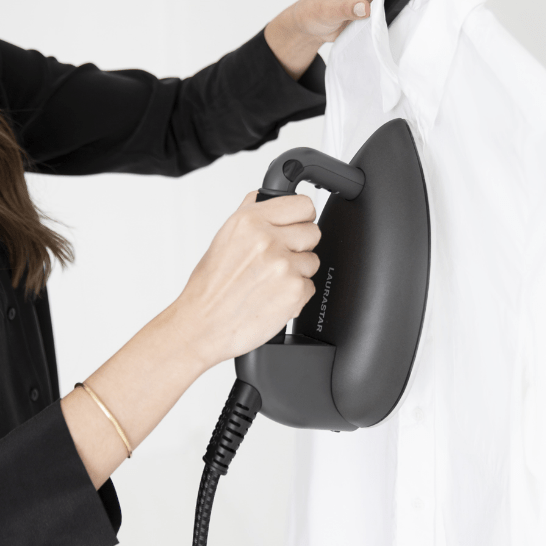
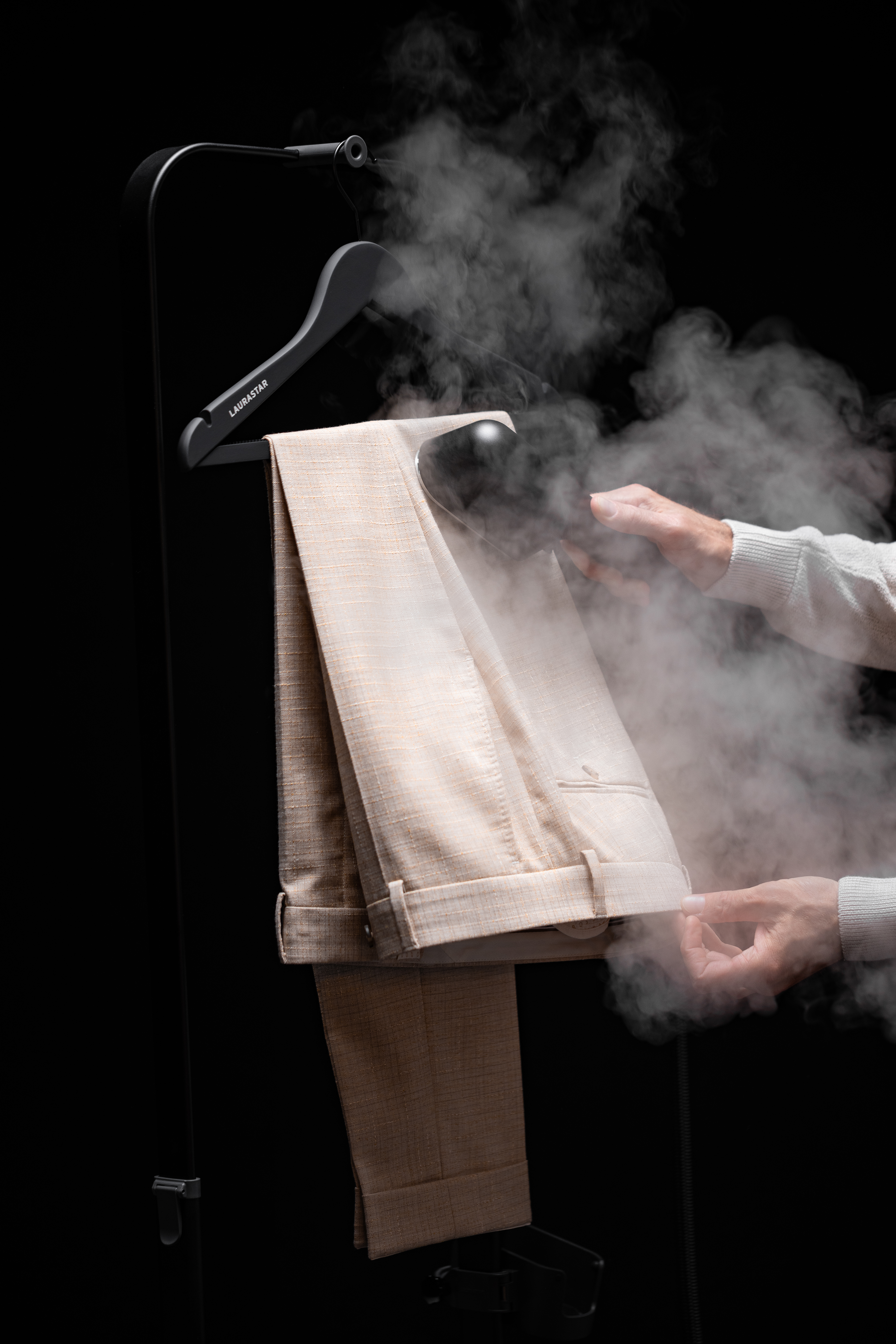
Laurastar’s DMS (Dry Microfine Steam) technology removes that last variable. DMS produces fine, dry steam particles that penetrate cashmere fibre without depositing surface moisture, which means no contact, no wet-steam risk, and no pressing cloth required. The garment comes away refreshed and de-wrinkled, dry to the touch.
For a fibre this fine, that’s a different approach to the problem altogether, not a marginal improvement on the existing one.
Is Steaming Always Better Than Ironing for Cashmere?
Yes, for almost all cashmere, steam without soleplate contact is the right method. The remaining question is what kind of steam.
A garment steamer removes the direct contact that causes felting and loft compression, making it a significant improvement over an iron, even a carefully used one with a pressing cloth. For most cashmere garments in most situations, a standard garment steamer used correctly will do the job safely.
The one remaining consideration is steam moisture on very fine or dark cashmere. Standard steamers produce relatively wet steam. On fine cashmere or dark-coloured knitwear (charcoal, navy, black), wet steam can deposit moisture unevenly and leave a temporary surface mark as it dries.
DMS, used in Laurastar ironing systems and garment steamers, takes a different approach. DMS produces fine, dry steam particles that penetrate fibre without depositing surface moisture. For cashmere, this means the garment comes away refreshed and de-wrinkled without any residual moisture risk on the surface.
Here’s how the three options compare for cashmere specifically:
| Iron (wool setting, pressing cloth) | Standard garment steamer | DMS steam | |
|---|---|---|---|
| Soleplate contact | Yes (via pressing cloth) | No | No |
| Felting risk | Moderate | Very low | Very low |
| Loft compression risk | Moderate | Very low | Very low |
| Moisture risk on dark cashmere | Low | Moderate | Very low |
| Safe for fine cashmere (14–16 micron) | With care | Yes | Yes |
For most households, a quality garment steamer used with the correct technique covers the majority of cashmere care needs well. For very fine or dark pieces, or for anyone caring for cashmere regularly, DMS removes the remaining variables.
What Are the Most Common Cashmere Care Mistakes?
Most cashmere damage is avoidable and comes from the same short list of errors. Each one has a direct fix:
- Ironing directly without a pressing cloth: Soleplate contact on cashmere without any buffer is the fastest route to felting and loft loss. Always use a pressing cloth, or switch to steam-only care entirely.
- Using too high a temperature: The wool setting is too hot for fine cashmere. For any iron approach, stay below 130°C. For the finest grades, steam-only is the reliable choice.
- Reaching for the Teflon shoe: It’s the right tool for silk and woven wool, but it protects against heat, not pressure. Cashmere needs no contact at all, shoe or no shoe.
- Steaming with the garment lying flat: Flat steaming traps moisture underneath the fabric. Always hang cashmere before steaming.
- Using tap water: Mineral deposits transfer during steaming and can leave pale marks on the surface. Distilled or filtered water only.
- Storing cashmere while still damp: Damp cashmere stretches under its own weight when folded. Dry fully (at least 20–30 minutes hanging after steaming) before storing.
- Steaming over existing pills: Steaming fabric that already has surface pills can mat those pills into the fibre structure. De-pill with a cashmere comb or fabric shaver first, then steam.
A genuine note: some cashmere is beyond home care. Heavily felted pieces, vintage knitwear with fragile construction, and cashmere coats with structural damage belong with a specialist dry cleaner who works with fine knitwear. Home care is maintenance, not restoration.
Frequently Asked Questions About Cashmere Care
Can you iron cashmere? With significant caution, yes. Steam without contact is the safer method for most cashmere. If ironing is necessary, use a pressing cloth, set the iron below 130°C, and keep it moving at all times. Direct soleplate contact on cashmere at any temperature carries a real risk of felting, loft compression, and shrinkage.
Should I use the Teflon SoftPressing soleplate on cashmere? No. The Teflon shoe protects against heat, which is the right solution for silk and woven wool. Cashmere’s damage comes from pressure as much as heat, and no soleplate cover prevents pressure. For cashmere, steam it without any contact at all rather than reaching for the shoe.
How do you get wrinkles out of cashmere? Hang the garment and use a garment steamer held 2–3cm from the surface in short downward strokes. Don’t press or apply contact with the steamer plate. For deep-set wrinkles, allow the garment to dry fully after the first pass and repeat. Time and a second gentle pass outperform more heat or pressure every time.
Is steaming better than ironing for cashmere? Yes, for most cashmere. Steam without soleplate contact removes the felting and loft-compression risk that even careful ironing carries. Standard steamers do this well for most pieces. For very fine or dark cashmere, a DMS steam system removes the residual moisture risk that standard steamer wet steam can introduce.
What temperature should you steam cashmere at? For steam-only care with no soleplate contact, steam temperature matters less than steam dryness and distance from the fabric. If using an iron with a pressing cloth, stay below 130°C. Above this threshold, fine cashmere fibres begin to contract and the risk of shrinkage and surface damage increases.
Does cashmere shrink when ironed? Yes, and the damage is permanent. Heat causes cashmere protein fibres to contract along their length. The wool setting on most irons (148–160°C) is above the safe threshold for fine cashmere. Once a cashmere garment shrinks, reliable restoration to its original dimensions isn’t possible.
Cashmere care is more straightforward than the dry-cleaning bill suggests, provided the right tool and the right technique are in place. Steam without contact, distilled water, and patience protect it. If you’d like to see what DMS steam does to a cashmere garment before committing to a system, Laurastar showrooms in Melbourne, Sydney, Brisbane, Adelaide, and Perth offer demonstrations on your own fabric. Bring a piece you care about.
You can also read our guide to Is a Laurastar Worth the Money? if you’re weighing whether a DMS system makes sense for your wardrobe.