How to Iron Silk Without Damaging It: The Method That Actually Works
- Silk is a protein fibre that reacts badly to two things a standard iron delivers at the same time: a hot soleplate pressing directly against the fabric, and wet steam depositing moisture unevenly. Both cause damage that, on dark silk, usually cannot be reversed.
- The safest at-home method for a conventional iron uses a low heat setting (90–110°C), a clean pressing cloth, and a slightly damp garment. Each step removes a specific cause of damage.
- Vertical steaming is the most reliable method for most silk garments : no soleplate contact, no moisture deposited on the surface. With a Laurastar, this is usually the whole job.
- Laurastar’s DMS (Dry Microfine Steam) technology removes both the sheen mark risk and the water-spot risk at the source. The Teflon SoftPressing soleplate lets you press dark silk face-up at full heat, with no pressing cloth and no temperature adjustment.
You lifted the iron and the damage was already there: a flat, reflective patch across the front of the blouse, or a ring of dried moisture on fabric that cost more than the iron itself. That damage is not a user error. On dark silk, it’s the predictable result of a tool designed for cotton doing two things silk cannot tolerate. This guide covers why standard irons and silk are physically incompatible, the correct at-home technique whichever iron you own, and why the right steam technology changes the result.
Why Does Silk Get Damaged by a Standard Iron?
Silk is a protein fibre, like hair or fine wool, and it reacts badly to the two things a standard iron delivers at the same time: direct dry heat and surface moisture laid down too quickly.
When a soleplate contacts silk at too high a temperature, the heat degrades the protein structure of the fibres. Above roughly 110°C, that degradation is permanent. The result is a flat, reflective sheen mark that doesn’t wash out and can’t be reversed.
Wet steam adds the second problem. If water droplets from a standard steam iron land unevenly on silk, the fibres absorb moisture at different rates. As the fabric dries, those inconsistencies show as rings or puckered patches. On bias-cut garments, where the weave is already under tension, moisture distortion can pull the whole piece out of shape.
What Are the Four Types of Silk Damage?
Understanding the specific damage types tells you exactly what you’re protecting against. Each has a different cause and a different fix:
- Sheen marks: caused by the soleplate pressing directly against silk at heat. Most visible on dark colours (navy, black, deep burgundy). Often irreversible.
- Water spots: caused by uneven moisture from wet steam. Fibres absorb at different rates and leave rings when dry. Common with standard steam irons on high steam settings.
- Scorch marks: caused by temperature set too high, or by leaving the iron stationary. A more severe version of sheen marks, often with a yellow or brown tinge.
- Fabric puckering: caused by heat and moisture under pressure on a loosely woven weave. Particularly common on bias-cut silk dresses and fine charmeuse.
None of these are careless mistakes. They’re the natural outcome of applying a tool designed for cotton to a fabric that requires a different approach entirely.
What’s the Best Way to Iron Silk at Home?
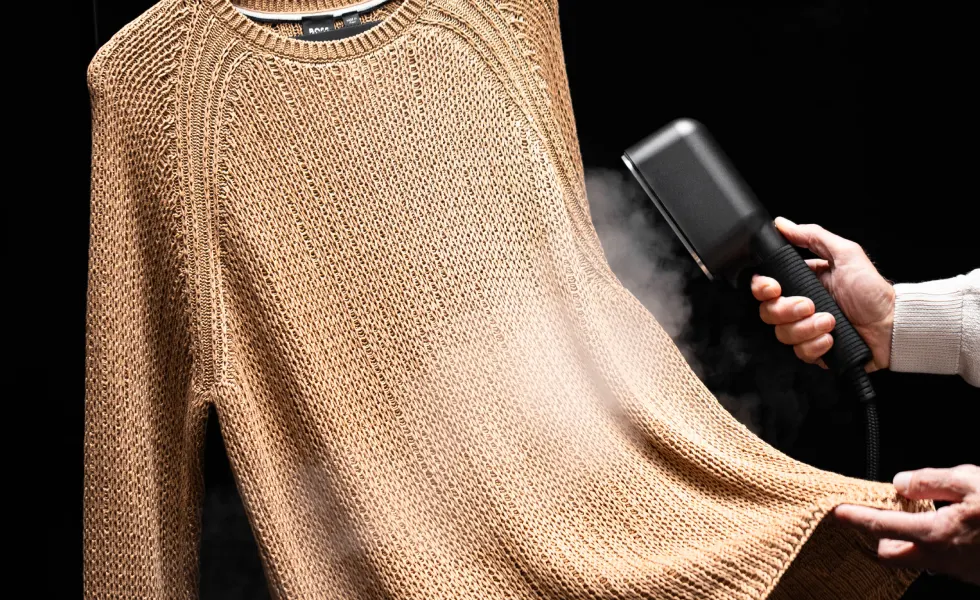
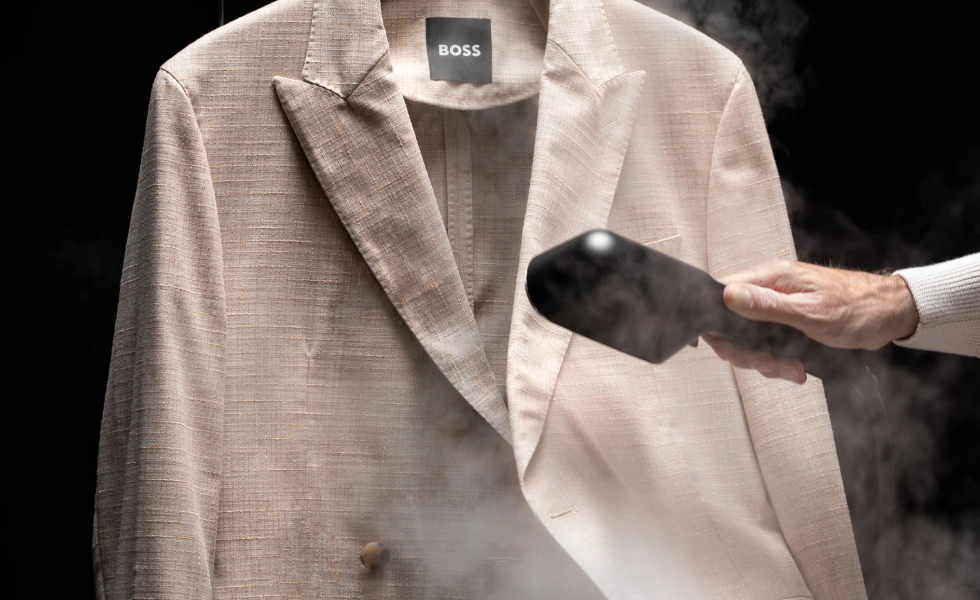
The most reliable method for most silk garments is vertical steaming. Hang the garment on a hanger, bring the iron close, and let the steam pass through the fabric. The fibres relax, the creases drop out, and for the majority of silk pieces, you never press flat at all.
With a Laurastar garment steamer, this is almost always the whole job. DMS (Dry Microfine Steam) produces fine, dry steam particles that penetrate fabric at a fibre level without depositing surface moisture. There’s no soleplate contact. The sheen risk and water-spot risk are both removed at the source, not managed through technique.
A standard garment steamer also avoids plate contact, but its steam is relatively wet. Water spotting on dark or very fine silk remains a real possibility. DMS removes both risks at once: no contact, and no surface moisture.
How Do You Iron Silk Safely With a Conventional Iron?
If you’re working with an ordinary iron, follow these steps in order. Each one removes a specific cause of damage. Done precisely, the method works, but the margin for error on dark or very fine silk is narrow.
- Check the care label: Garments labelled dry-clean only should not be ironed at home. A one-dot iron symbol means the low setting below is appropriate.
- Set the iron to the silk or low setting (90–110°C): Above this, you’re in sheen-mark territory. Most irons label this as the “silk” or “one-dot” setting.
- Turn the garment inside out: Ironing the reverse means the soleplate never contacts the visible surface. This removes the sheen mark risk on the outer fabric.
- Use a clean pressing cloth: A dry cotton or muslin cloth between the iron and the garment diffuses direct heat and stops moisture concentrating in one spot. A clean tea towel works if you don’t have a dedicated pressing cloth. Nothing synthetic.
- Iron while slightly damp: Mist lightly with distilled water and wait five minutes before ironing. Slightly damp, not wet.
- Use short, light movements: Keep the iron moving at all times. A stationary iron on silk, even at the correct temperature, risks a scorch mark within seconds.
- Hang immediately: Silk holds creases while it’s warm. Left folded for even a few minutes, new creases form.
For heavily embellished pieces, very loosely woven silk, or bias-cut garments, the distortion risk at home is high enough that vertical DMS steaming or a professional finisher is the more reliable option.
What If You Want a Crisper Finish on Silk?
Vertical steaming handles most of the job for most silk. For a crisper finish on a collar, cuff, or sharp front, the approach depends on which iron you own.
With a conventional iron, you drop the temperature to 90–110°C, use a pressing cloth, and iron inside-out. The low temperature costs you steam power, and the pressing cloth requires careful positioning. Done correctly, it works.
With a Laurastar, the approach is different. Clip on the Teflon SoftPressing soleplate (the Teflon shoe) and glide at full heat. The Teflon barrier sits between the hot soleplate and the fabric, which means:
- No pressing cloth needed: the shoe is the protective layer
- No ironing inside-out: the barrier protects the visible surface directly
- No dropping the temperature: full heat and full steam, with the Teflon doing the protection work
- Dark silk can be pressed face-up, with no risk of sheen
The technique with the Teflon shoe is the opposite of the careful conventional-iron routine: smooth, confident gliding strokes at full heat. The guesswork that causes most accidental sheen on dark silk is removed entirely.
Is Steaming Silk Safer Than Ironing It?
Generally, yes. Steaming removes the soleplate contact that causes sheen marks and scorch damage. But the type of steam matters more than most guides acknowledge.
A standard steam iron in steam mode still produces wet, pressurised steam. That steam can deposit moisture unevenly on the fabric surface, causing the same water spotting described above, particularly on dark silk or fine weaves. Switching to “steam” on a standard iron does not automatically make it silk-safe.
A dedicated garment steamer is a step forward. It delivers steam from a distance with no plate contact, which removes the sheen and scorch risk entirely. But steamer steam is still relatively wet, which is why water spotting on dark or very fine silk remains a real possibility.
Here’s how the three approaches compare on silk:
| Low-heat iron + pressing cloth | Standard garment steamer | Laurastar (DMS) | |
|---|---|---|---|
| Primary method | Press flat, inside-out, through a cloth | Steam from a distance | Vertical steam, or glide with the Teflon shoe |
| Steam type | Wet (in steam mode) | Wet | Dry Microfine Steam |
| Water-spot risk on dark silk | Moderate | Moderate | Very low |
| Sheen / scorch risk | Low (only if pressing cloth + low heat done correctly) | None | None when steaming; very low with the Teflon shoe |
| Soleplate contact | Yes (through cloth) | No | None when steaming; protected glide with the Teflon shoe |
| Need to dial heat down | Yes (90–110°C) | n/a | No: the Teflon shoe protects at full heat |
| Fine charmeuse / bias-cut silk | With care | With care | Yes |
If you own silk in dark colours or very fine weaves, the steam technology you use matters as much as your technique.
What Are the Most Common Silk Ironing Mistakes?
Most silk damage follows the same pattern. The same errors come up repeatedly, and each has a specific, fixable cause. Several apply only to conventional irons. With a Laurastar, the Teflon shoe and vertical steaming remove them entirely.
- Using the wrong temperature: The most common cause of sheen marks with a conventional iron. Always set below 110°C and test on an inside seam first. (With a Laurastar and the Teflon shoe, you don’t lower the dial at all.)
- Skipping the pressing cloth: On a conventional iron, the cloth is not optional. It’s the mechanism the whole method depends on. (On a Laurastar, the Teflon shoe replaces it.)
- Ironing dark silk on the right side: Sheen shows immediately on navy, black, charcoal, or deep burgundy. On a conventional iron, always go inside-out. (Not needed with the Teflon shoe.)
- Leaving the iron stationary: A few seconds without movement is enough to cause a scorch mark, even at the correct temperature. Keep a conventional iron moving at all times.
- Using tap water in a steam iron: Mineral deposits transfer to silk and leave pale marks that are difficult to remove. Use distilled or filtered water.
- Ironing silk bone dry: Dry silk is more vulnerable to direct heat. Mist lightly with distilled water a few minutes before you start, then wait for the surface moisture to absorb. (Unnecessary with DMS: the dry steam does the relaxing without added moisture.)
A note of honesty: some pieces are genuinely difficult to finish well at home, regardless of technique. Heavily beaded garments, very loosely woven silk organza, and complex bias-cut dresses carry real distortion risk that no method fully removes. For those pieces, vertical DMS steaming or a professional finisher is the more reliable answer.
Frequently Asked Questions About Ironing Silk
- Can you iron silk? Yes. With a conventional iron, use a low setting (90–110°C), a clean pressing cloth, and keep the iron moving. With a Laurastar, the easier route is usually not to iron flat at all: hang it and steam it vertically, or clip on the Teflon SoftPressing soleplate and glide at full heat with no cloth and no inside-out.
- What temperature should you iron silk at? On a conventional iron, the lowest setting available: 90–110°C. Above this range, the protein fibres degrade and sheen marks become likely. Always check the care label first. With a Laurastar, you don’t lower the temperature: the Teflon shoe protects the fabric while you keep full steam and heat.
- Can you use a steam iron on silk? With caution. Standard steam irons produce wet steam that can water-spot fine or dark silk, even at the correct temperature. A dry iron at the silk setting with a lightly damp pressing cloth is often the safer choice on a conventional iron. DMS is dry, which removes that risk altogether.
- Does steaming silk damage it? Standard garment steamers are safer than direct ironing because there’s no plate contact, but their steam is relatively wet and can mark dark or very fine silk. DMS produces dry steam that relaxes the fibres without depositing surface moisture, which removes the water-spotting risk that standard steamers carry.
- What’s the best way to iron a silk blouse? With a Laurastar: hang it and steam it vertically. If you want a crisp finish on the collar or front, glide over it with the Teflon SoftPressing soleplate at full heat. With a conventional iron: turn it inside out, set 90–110°C, use a clean dry pressing cloth, work in short light movements while the fabric is slightly damp, and hang it immediately.
Ironing silk well is a matter of technique, not luck, and the right tool removes most of the technique. Laurastar showrooms in Melbourne, Sydney, Brisbane, Adelaide, and Perth offer demonstrations on your own fabric. Bring your most difficult piece and see what DMS steam does to it in person.
You can also read our guide to Is a Laurastar Worth the Money? if you’re weighing whether a DMS system makes sense for your wardrobe, particularly if much of what you’d otherwise send to the dry cleaner is silk.