How to Iron Linen: The Technique That Finally Gets the Wrinkles Out
- Linen wrinkles fast because flax fibres have almost no natural spring-back, and its loose weave lets fibres shift and crease under the lightest pressure.
- Damp ironing softens the fibres just long enough to press them flat, but it doesn’t reset the fibre structure, so the crease returns as soon as the fabric fully dries.
- Standard steam stations produce wet steam that sits on the surface rather than penetrating it, which is why textured or dark linen often comes away with water spotting.
- Linen needs steam to relax the fibre and heat from an iron to actually set it flat again, which is why ironing gets a lasting result that steaming alone doesn’t.
You mist your linen shirt, iron it while it’s still damp, and it looks sharp for about an hour. Then it wrinkles again before you’ve even left the house. That’s just how linen fibres behave under heat and moisture. Damp ironing softens the fibres enough to smooth them, but it doesn’t change the reason linen wrinkles in the first place, so the crease comes straight back once the fabric dries. Learning how to iron linen properly means resetting the fibre itself, and that takes both steam and heat together, not one or the other, which is what Laurastar’s DMS technology is built to do in a single pass.
Why does linen wrinkle so easily?
Linen comes from flax, a fibre with almost no natural elasticity. Cotton and wool fibres have a slight crimp that lets them spring back after bending. Flax fibres are straight and stiff, so once they’re creased, they stay creased until something resets them.
Linen’s weave makes this worse. Most linen uses a loose, plain weave that gives individual fibres room to shift under pressure. Sit down, fold it, or pack it in a bag, and the fibres lock into that new shape almost immediately. This is a structural property of the fabric, not a sign of poor quality or careless handling.
Why linen needs both steam and heat, not just one
Resetting a flax fibre is a two-step job. Steam relaxes the fibre, loosening it enough to be reshaped. Heat, applied through direct contact with a hot soleplate, is what actually sets that fibre back into a flat position once it’s relaxed. Skip either half and the result doesn’t hold: steam without heat lets the fibre relax but never locks it flat, and heat without enough steam just presses a stiff, resistant fibre without loosening it first.
This is the main reason ironing beats steaming for linen specifically. A garment steamer’s plate isn’t heated to genuine pressing temperature, since its job is to stop condensation rather than set a fabric, so it can relax a crease without ever properly resetting it. An iron, run at the right temperature with steam behind it, does both jobs in the same pass. That’s a real, structural difference for linen, not a matter of preference or convenience.
The damp-ironing workaround and where it falls short
Damp ironing is the workaround most people default to mist the linen or pull it from the wash while it’s still wet, then press it while the fibres are relaxed. It works, briefly, because moisture makes the fibres more pliable while the heat resets their shape.
The problems show up once the garment dries. Uneven dampness leaves shiny patches and water rings, especially on coloured or textured linen where any surface moisture shows clearly. Getting a genuinely crisp result also usually means pressing at a high, sustained heat, which is exactly the combination that risks scorch marks on linen’s stiffer weave. And because the moisture is doing the actual work, the effect disappears once the fabric fully dries. A few hours of movement and the linen creases again, because nothing about the fibre structure itself was changed.
Where standard steam stations struggle with linen
Standard steam stations produce wet, pressurised steam. On a loosely woven or textured fabric like linen, that steam doesn’t distribute evenly. It settles into slub yarns and heavier patches of weave, leaving blotchy marks or rings once the fabric dries, particularly on darker linen where any moisture is highly visible.
The deeper issue is that wet steam mostly sits on the surface rather than working into the fibre itself. For anything with a stubborn, deep-set crease, a tablecloth folded for months or trousers with sharp seat wrinkles, this means several passes and a result that starts relaxing back into creases as soon as the fabric cools.
How does Laurastar get linen crisp without the water marks?
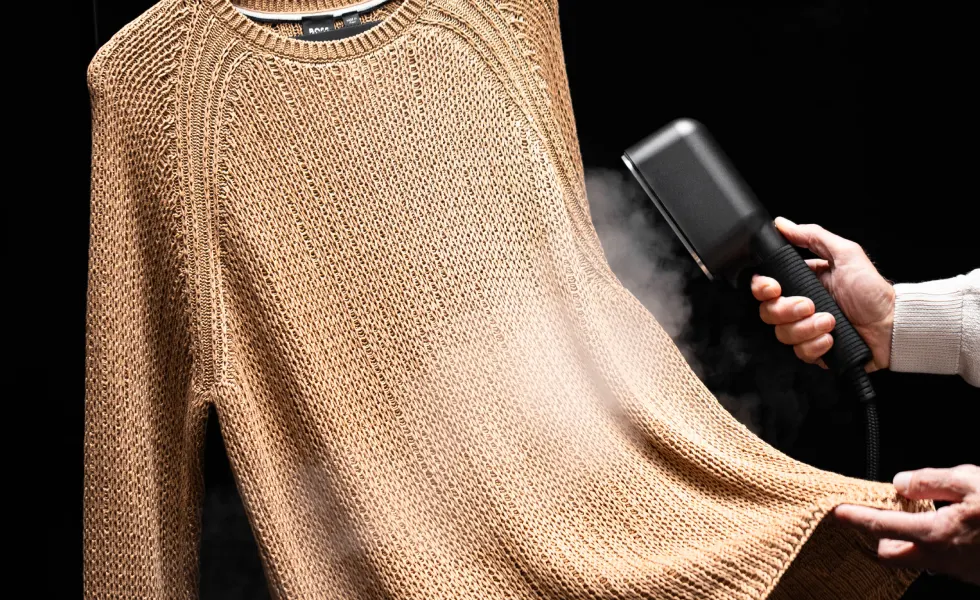
Laurastar’s DMS, Dry Microfine Steam, produces fine steam particles that penetrate the fibre rather than depositing moisture on the surface. On linen, that means no water spotting, even on textured weaves or dark colours where standard steam struggles most.
DMS steam does the relaxing half of the job at the fibre level rather than the surface, and the iron’s direct contact and heat do the setting half in the same pass. That combination is what resets the fibre structure that causes the wrinkle, rather than just softening it temporarily the way steam alone would. The result holds through movement and a full day of wear, not just until the fabric dries. There’s no dial to switch between fabrics either. The same DMS steam and contact handle a linen shirt and a heavier linen tablecloth without you adjusting a setting in between.
Here’s how the three approaches compare on linen specifically:
| Standard iron (damp ironing) | Standard steam station | DMS steam and contact | |
|---|---|---|---|
| Water spotting on textured or dark linen | Common | Common | Very low |
| Scorch risk at the heat needed for a crisp finish | Moderate | Low | Low |
| Resets the fibre structure (vs softens temporarily) | Yes, but with scorch and water-mark risk | No, steam alone can’t set the fibre | Yes |
| Suitable for large flat pieces (tablecloths) | Awkward, limited board size | Multiple passes needed | Yes, with Active Board |
| Holds through a full day | Yes, if the press is even | No | Yes |
How do you iron a linen shirt?
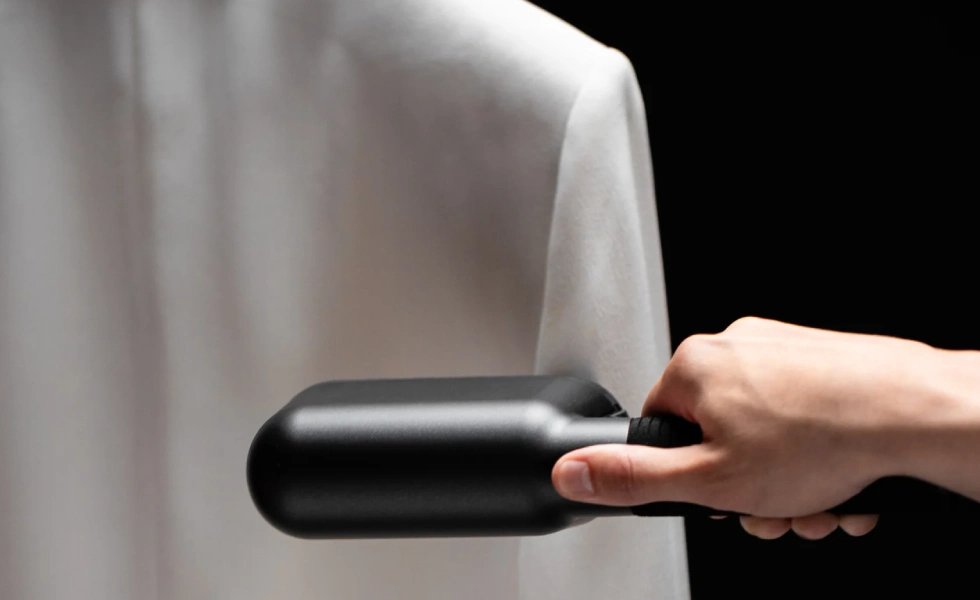
A quick shirt is where the Laurastar Lift or Lift Xtra earns its place, the same category most people compare against a Tefal, Philips, or Braun iron for everyday use. DMS steam combined with direct contact on the soleplate lifts linen’s stiff fibres and sets them flat in a single pass, rather than the two or three a standard iron usually needs.
If you’re pressing a linen shirt in a colour or weave where shine is a concern, the Teflon shoe included with the iron sits between the soleplate and the fabric, so you get a firm press without a reflective patch on the collar or cuffs. For a morning routine before a summer wardrobe change, this is the difference between ironing being a five-minute step and a ten-minute one.
Pressing a linen tablecloth without a table-sized board
Tablecloths and other large flat linen pieces are where a standard ironing board runs out of usable surface. This is the job the Smart U and S-Pure are built for, the tier that goes up against Miele’s Fashion Master in a household that irons at this volume regularly.
The Active Ironing Board‘s vacuum holds the fabric taut against the full board surface while the iron’s steam and heat work through it together, so the whole piece presses and sets evenly rather than in overlapping sections that each need their own pass. The blower then releases the fabric crisp rather than damp, which matters on a tablecloth headed straight onto a table rather than a hanger. One even pass replaces the usual process of repositioning a folded tablecloth across a domestic board four or five times.
How do you get creases out of linen trousers?
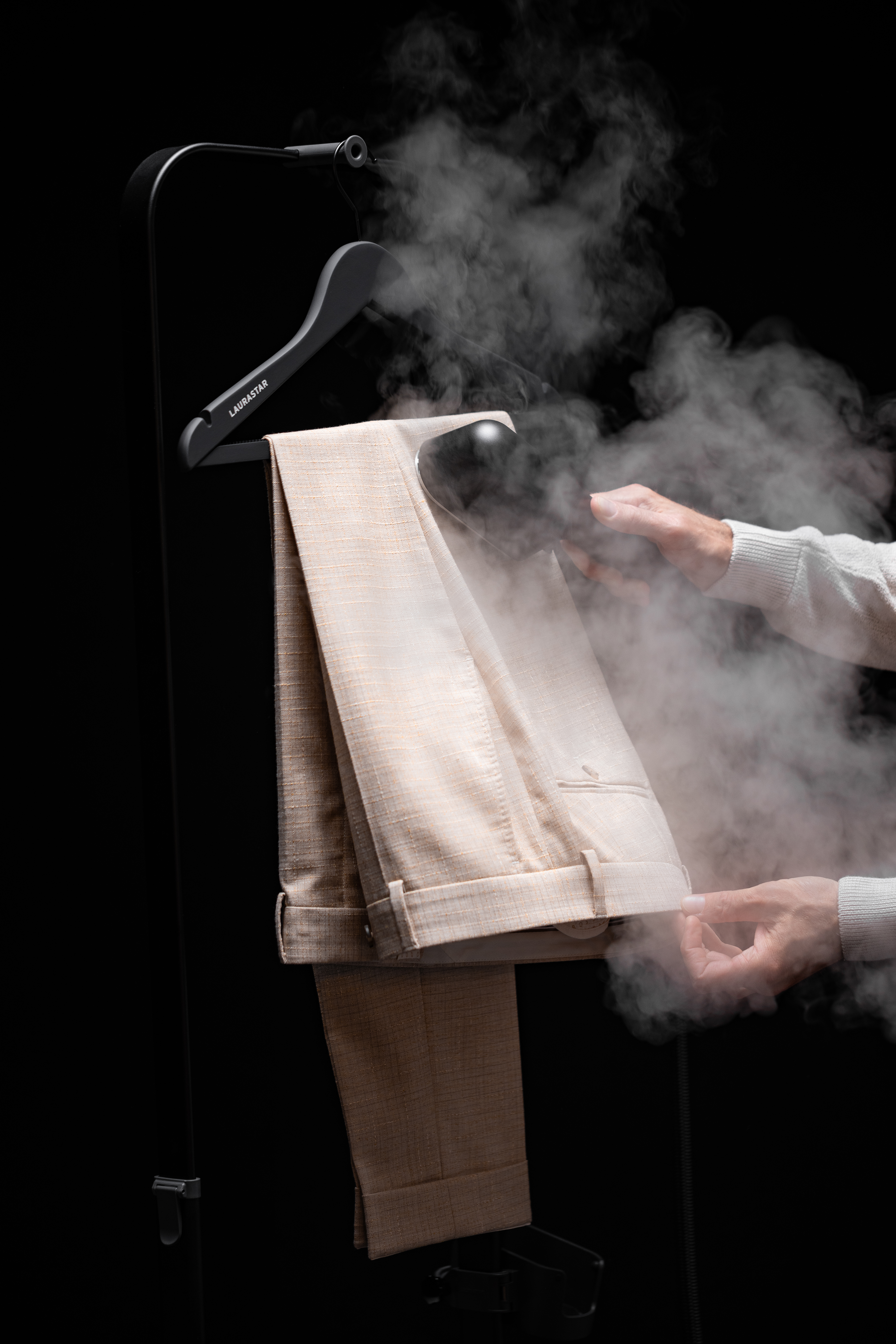
Trousers concentrate their worst creases at the seat and the backs of the knees, exactly where linen’s low elasticity shows up most. Ironing with DMS works through these areas directly, releasing the fibre with steam and setting it flat with heat in the same motion, rather than pressing a crease flatter without resetting it.
A vertical steamer can take the sharpest edge off a crease between full presses, since it’s genuinely useful for a quick refresh on hanging garments, but it isn’t a substitute for ironing on linen specifically. Without an iron’s heat setting the fibre flat, whatever a steamer relaxes will start creasing again as soon as you sit down or move. For anything beyond a light touch-up, a proper press on the board is what actually holds.
Keeping linen from wrinkling straight after you press it
Linen will always crease faster than cotton or synthetic blends. That’s simply how flax fibres behave under repeated bending, regardless of technique. What changes is how much re-ironing that creasing costs you across a summer of wear.
A full press with DMS steam and heat resets the fibre rather than smoothing the surface, so a shirt or trousers hold their finish through a normal day rather than creasing again within an hour, the way a damp-ironed garment often does. That means one proper press replaces what would otherwise be two or three touch-ups through the day. For anyone who wears linen through an entire Australian summer rather than the occasional event, that adds up to a lot of ironing time saved, not just a crisper single result.
It’s also worth hanging linen properly the moment it comes off the board rather than folding it while warm, since linen holds whatever shape it’s in as it cools. A few seconds on a hanger does more to keep the press intact than any amount of extra ironing.
Common linen ironing mistakes
Most linen damage or disappointment traces back to the same handful of habits.
Ironing linen bone dry with a standard iron. Dry linen resists a standard iron’s heat far more than damp linen does, which is exactly why the damp workaround exists in the first place. It’s a symptom of the underlying problem, not a genuine fix.
Relying on a steamer alone for anything beyond a light touch-up. Steam relaxes the fibre, but without an iron’s heat and contact to set it flat again, a deep or established crease will start coming back almost as soon as you move.
Skipping a test pass on dark or textured linen. Slub weaves and darker dyes show water spotting from wet steam more clearly than plain, pale linen does, so a mark that would be invisible on a white shirt shows up immediately on a navy one.
Folding a tablecloth back into storage before it’s fully cooled. Linen holds whatever shape it’s in as it cools, so folding it warm sets new creases almost as fast as the ironing removed the old ones. Let it cool flat or hanging before it’s folded away.
Frequently Asked Questions
What’s happening when linen “sets” a wrinkle?
The fibre bends under pressure and, because flax has so little natural spring-back, holds that bend rather than releasing it. Steam is what lets the fibre relax enough to be reshaped, and heat from direct iron contact is what locks it back into a flat position. Doing only one half of that, steam without heat, or heat without enough steam, doesn’t get a result that holds.
Do you actually need to iron linen?
For everyday wear, a lot of people leave linen with some texture, since a slightly relaxed look is part of the fabric’s appeal. For a shirt going into a workplace or a tablecloth going on a table, a proper press still matters, and it’s worth knowing that the extra ten minutes of scorch-checking and multiple passes a standard iron demands isn’t actually required. A single DMS pass gets you there without the usual trade-off between time and finish.
Why is linen so hard to iron with a normal iron?
Flax fibres are denser and stiffer than cotton, so heat takes longer to work through the weave and reset the crease. A standard iron has to compensate with higher heat and a slower, heavier pass, which is exactly the combination that risks scorching. DMS reaches the same result through steam penetration combined with heat rather than raw heat alone, so it doesn’t need that trade-off.
What temperature should you iron linen at?
This is where Laurastar works differently to a standard iron. There’s no separate dial to switch to a “linen setting,” since DMS steam and contact heat do the work together rather than a specific temperature threshold. On a standard iron, by contrast, getting linen crisp usually means running close to the top of its safe heat range, which is exactly where scorch risk starts.
Do you have to iron linen while it’s damp?
Not with DMS steam. Damp ironing on a standard iron works around the fact that dry heat alone doesn’t hold on linen, but DMS supplies its own steam alongside the iron’s heat, so it doesn’t need that extra moisture and doesn’t leave the same water marks once the fabric dries.
Why does my linen tablecloth still look wrinkled after steaming?
Steam alone, whether from a standard steam station or a garment steamer, only does half the job on linen. It relaxes the fibre but doesn’t set it flat, since that setting step needs direct heat from an iron’s soleplate. This is the exact gap a proper DMS press, steam and heat together, and the Active Board’s even pressure are built to close on a piece too large for a normal board.
Can steaming replace ironing for linen?
Not really, and this is specific to linen. A vertical steamer can take the edge off a light, everyday crease, but because it relaxes the fibre without the heat needed to set it flat again, the result doesn’t last the way a proper iron press does. For anything with an established fold line or a deep seat wrinkle, ironing with steam and heat together is what actually resets the fibre rather than just loosening it temporarily.
Linen’s wrinkling is a fibre property, and knowing how to iron linen properly means resetting that fibre with steam and heat together, not just relaxing it with steam alone for an hour. If you want to see the difference DMS makes on your own linen, Laurastar’s showrooms in Sydney, Melbourne, Brisbane, and Perth run no-obligation demonstrations. Bring the tablecloth or shirt that’s given you the most trouble.