Ironing Board Cover: Why It Matters More Than You Think and How to Choose the Right One
An ironing board cover protects the board, gives the iron a smooth surface to glide across and controls how steam passes through the fabric you’re pressing.
Cotton covers let steam through and suit most irons, metallised covers reflect heat but can trap moisture, and felt or foam underlays add the padding that stops the board’s mesh marking clothes.
Measure your board’s length and widest point before buying, and choose a fastening system (drawstring, elastic or clips) that pulls the cover taut with no wrinkles.
A worn, thin or non-breathable cover makes any iron perform worse, and steam irons, including Laurastar’s DMS steam, work best on a cover designed to let steam pass through.
An ironing board cover does more than stop the board scratching your clothes. It’s the surface your iron glides across, the padding that shapes every crease, and the layer that decides whether steam passes through your garment or gets trapped underneath it. A worn or poorly chosen cover can make a good iron perform like a cheap one.
The good news is that choosing the right ironing board cover is straightforward once you know what to look for. Here’s how the main materials compare, how much padding you need, how to get the size right, and when it’s time for a replacement.
What does an ironing board cover do?
An ironing board cover gives your iron a smooth, heat-resistant surface, cushions the fabric so creases press out evenly, and lets steam pass through the garment instead of pooling beneath it. It also protects the board’s metal mesh from heat and stops that mesh pattern pressing into your clothes.
Most of the difference you feel between a good and bad ironing session comes down to those last two jobs. A cover with too little padding lets the board’s surface show through as faint marks on finer fabrics. A cover that doesn’t let steam escape leaves moisture sitting under the garment, which is one of the most common reasons clothes come off the board damp.
What are ironing board covers made of?
Ironing board covers are usually made from cotton, a metallised or silicone-coated fabric, or a blend, sitting on top of a padding layer of foam, felt or wool. The top layer controls glide and steam flow, and the padding controls how firm or soft the surface feels.
Cotton covers
Cotton is the most common top layer and the most versatile. It’s breathable, so steam passes through easily, it handles high heat well, and it gives a slightly textured surface that holds garments in place without them sliding as you iron. Tightly woven cotton also resists scorching better than thinner synthetic fabrics. For most households and most irons, a good cotton cover is the right choice.
Metallised and silicone-coated covers
Metallised covers have a reflective silver coating designed to bounce heat back up into the garment, so you’re effectively ironing from both sides. Silicone-coated covers have a slick surface that helps the iron glide and resists sticking and scorching.
The trade-off is breathability. A coated surface lets far less steam through than cotton, so with a powerful steam iron or steam station, moisture can build up under the garment and leave it damp. These covers can suit a dry iron or occasional light steaming, but they’re a less natural fit for steam-heavy ironing.
Wool felt and felt underlays
Wool felt is used as a padding layer under the cover rather than as the top surface. It’s dense, heat-resistant and breathable, and it gives a firm, even base that’s good for crisp creases in shirts and trousers. Some covers come as a complete set with a felt or wool underlay, while others are sold as a top layer only, designed to go over padding you already have.
Foam padding
Foam is the most common padding in modern covers. It’s light, cushioned and keeps its shape well when new. The thickness varies a lot between products, from very thin backings of around 2 mm on budget covers to thicker layers on premium covers, and it’s the main thing that wears down over time.
How thick should an ironing board cover be?
Look for a cover with enough padding to hide the board’s mesh completely, typically around 4 to 6 mm of foam or an equivalent felt underlay. Thinner padding lets the mesh pattern show through on delicate fabrics, while very soft, thick padding can make it harder to press a sharp crease.
The right thickness is firm enough to push back against the iron and soft enough to absorb seams, buttons and pockets. Laurastar’s Universal Cover, for example, uses a 100% cotton top over 6 mm of foam padding. If your current cover feels thin when you press down, or you can feel the mesh through it, the padding has compressed and it’s time for a replacement.
How do I find the right size ironing board cover?
Measure your board’s full length from tip to tail and its width at the widest point, then choose a cover designed for those dimensions. A cover that’s slightly larger than the board is fine, since the fastening pulls the excess underneath, but one that’s too small won’t stay in place.
Many boards and covers sold in Australia follow a common set of size codes. Here’s what the widely used A to E sizing means.
Size
Board dimensions (length x width)
Typical board
A
110 x 30 cm
Compact or small boards
B
124 x 38 cm
Standard boards
C
124 x 45 cm
Wide boards
D
135 x 45 cm
Large boards
E
135 x 49 cm
Extra-large boards
If your board doesn’t carry a size label, use your own measurements. Universal covers are designed to fit a range of standard boards, and Laurastar’s Universal Cover suits boards up to 125 x 42 cm.
Which fastening is best: drawstring, elastic or clips?
A drawstring gives the most adjustable fit and suits boards of slightly different sizes, elastic edges are the quickest to fit and work best when the cover is made for your specific board, and clips or straps underneath add tension so the surface stays taut. The best covers combine two of these.
Whatever the fastening, the goal is a cover that sits completely flat with no ripples. A wrinkled or loose cover transfers creases straight back into the garment you’re pressing, which undoes the work you’ve just done.
How often should you replace an ironing board cover?
Replace your ironing board cover when the padding has thinned, the surface is scorched or discoloured, or you can see or feel the board’s mesh through it. A worn cover makes ironing slower and can transfer old stains or scorch marks onto clean clothes.
Other signs include elastic or drawstrings that no longer hold the cover tight, a surface that’s become shiny and slippery, and a cover that stays damp long after you’ve finished ironing. How quickly this happens depends on how often you iron and how much steam you use.
Why your ironing board affects how well your iron performs
The board and cover are half of the ironing system, yet they’re often the last thing people think about when buying an iron. A powerful steam iron on a thin, non-breathable cover will leave clothes damper and take longer to get the same result as a modest iron on a well-padded cotton cover.
This is most noticeable with steam. Steam needs somewhere to go once it’s passed through the fabric. A breathable cover and a vented board let it move through and away, which relaxes the fibres and leaves the garment dry. A coated or worn-out cover holds the moisture underneath, which is one of the main reasons clothes come off the board damp. Our guide on why your iron leaves clothes wet covers this and the other common causes.
Laurastar’s Dry Microfine Steam (DMS) is designed to leave fabric dry, but it still works best on a surface that lets steam pass through freely. That’s why Laurastar’s covers use materials developed to let the right amount of steam through, and why its full ironing systems pair the iron with an active board that uses vacuum and blower functions to draw steam through the fabric or lift it on a cushion of air.
How to wash and care for an ironing board cover
Check the care label first, since padding and coatings vary. Most cotton covers can be machine washed on a cool, gentle cycle, and Laurastar’s covers are machine washable at 30°C on a no-spin cycle. Let the cover dry completely before refitting it, then pull the fastening tight so it sits flat.
Between washes, let the cover dry out fully after each ironing session before folding the board away. Storing a board with a damp cover is the quickest way to end up with mildew and a musty smell.
Laurastar ironing board covers and boards
If you’re replacing a cover or upgrading your board, Laurastar’s ironing boards and covers range includes options for standard boards as well as Laurastar systems.
The Universal Cover is designed to fit most standard ironing boards, with a 100% cotton top, 6 mm foam padding and a drawstring and clip for a tight fit. The SMART Universal Cover adds printed guide lines that help you position and fold garments. The MyCover range is cut specifically for Laurastar’s Smart and S range ironing systems and uses an elastic band for quick fitting.
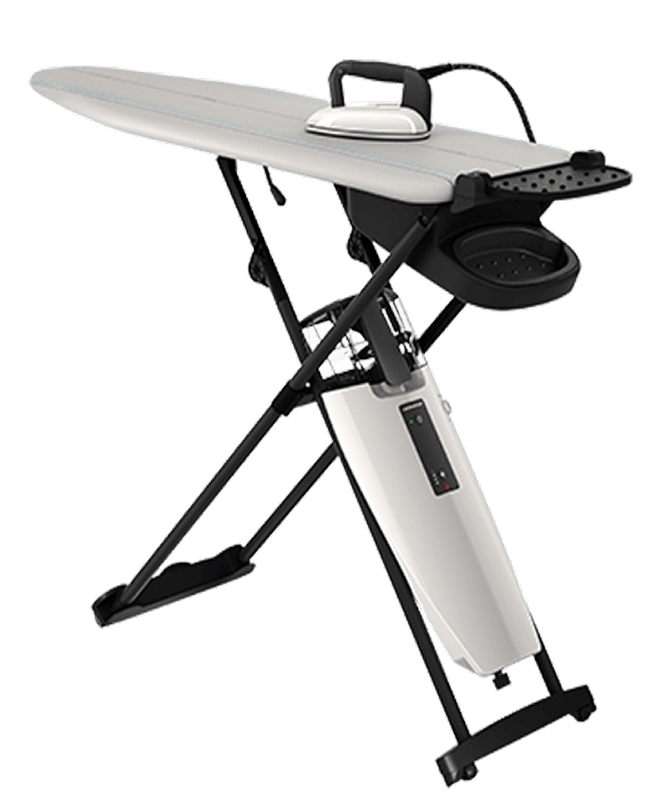
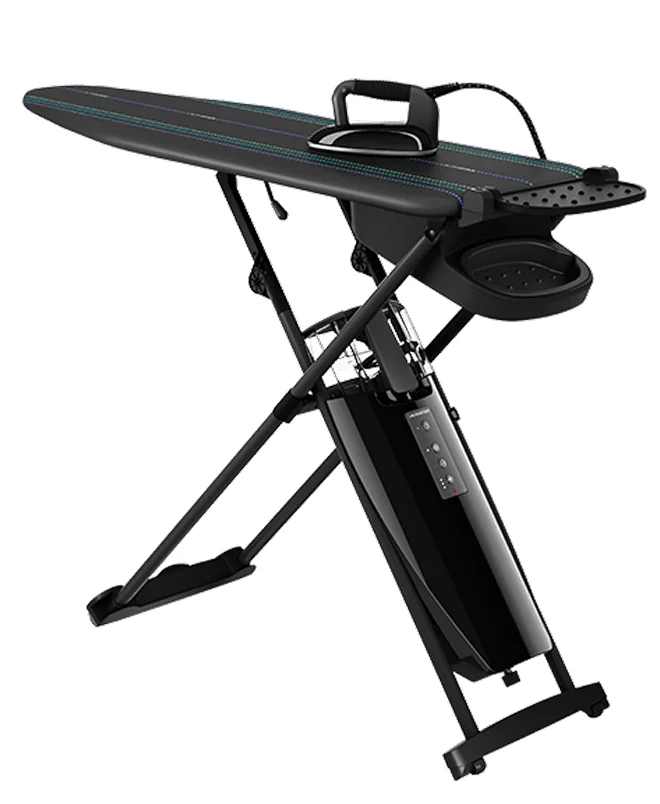
If your board itself is the problem, the Comfort Ironing Board and the Plus Ironing Board with wheels are designed to pair with Laurastar’s Lift steam stations. For a complete setup with the board built in, Laurastar’s ironing systems combine the iron, steam generator and active board in one unit.
Frequently asked questions about ironing board covers
What is the best material for an ironing board cover?
For most people, a tightly woven 100% cotton cover over a good layer of foam or felt padding is the best choice. It lets steam through, handles high heat and gives a firm, even surface for crisp results.
Are metallic ironing board covers better than cotton?
Not for everyone. Metallic covers reflect heat back into the garment and help the iron glide, but they’re less breathable, so with a powerful steam iron they can trap moisture under your clothes. Cotton suits steam ironing better.
Can I put a new cover over an old one?
You can, as long as the old cover is clean and dry and the new one still fits tightly. The old padding adds cushioning, but if it’s scorched or mouldy, remove it first so it doesn’t transfer marks or smells.
Will a universal ironing board cover fit my board?
Universal covers fit most standard boards, but check the dimensions first. Measure your board’s length and widest point and compare them with the sizes the cover is designed for.
Why does my ironing board cover get wet?
A cover gets wet when steam passes through the garment but can’t escape through the cover and board. Thin, compressed, coated or poorly ventilated covers trap the moisture, which can also leave your clothes damp.
The right cover makes every iron work better, from a basic steam iron to a full ironing system. If you’d like to see the difference a well-matched board and cover make, Laurastar’s showrooms in Melbourne, Sydney, Brisbane and Perth will demonstrate it on a garment you bring in yourself.