How to Steam Delicate Fabrics When Travelling: Silk, Lace and Chiffon
- Packing creases sit differently to everyday wrinkles, they’re sharp, deep fold lines set under the weight of a suitcase, and they need more than a quick pass to release.
- Silk, lace, and chiffon are the three fabrics most likely to get packed for a trip and most likely to come out the worse for it, and each fails in a different way under the wrong heat or moisture.
- A hotel iron is an unknown quantity: unfamiliar settings, no way to test it first, and no time to recover if it scorches or water-marks the one outfit you brought for the occasion.
- A portable steamer that works the same way on every delicate fabric removes the guesswork a hotel iron can’t.
You unzip the garment bag an hour before you need to leave and the dress looks like it’s been slept in. The hotel iron is sitting in the closet, but you’ve got no idea what setting it’s on, no test scrap to check it on, and one shot at getting this right. That’s the exact moment silk, lace, and chiffon punish the wrong decision.
Packing creases don’t behave like everyday wrinkles
A wrinkle from a day of wear sits loosely in the fabric. A packing crease is different. It’s been folded, compressed under other clothes, and often sat that way for hours or days, so the fibre has properly set into that shape rather than just resting in it.
This matters more on delicate fabrics because the fix that works on a folded cotton shirt, more heat, more pressure, is the same fix that damages silk, lace, and chiffon. The crease needs releasing at the fibre level, not flattening harder from the outside.
Three fabrics, three different failure points
Each of these three fabrics fails differently, which is why a single generic “iron on low” instruction doesn’t really cover any of them properly.
Silk creases sharply along fold lines and is one of the fastest fabrics to pick up a sheen mark or scorch if a hot soleplate makes direct, sustained contact with it. Our guide to ironing silk without damaging it covers this in more depth if silk is the main thing in your suitcase.
Lace is structurally different again. Its open weave means there’s less fabric holding the pattern in shape, so heat or pressure applied unevenly can distort or flatten the design rather than just crease it. Depending on the lace, the fibre itself might be cotton, silk, or a synthetic blend, which is worth checking on the care label before you apply any heat at all, since a synthetic lace trim can react to heat in a way a natural fibre won’t.
Chiffon is lightweight and sheer, and that thinness is exactly what makes it vulnerable to puckering. Uneven moisture from wet steam settles into the weave inconsistently, and because there’s so little fabric weight to hold it flat, the result is visible puckering rather than a clean, even finish.
The hotel iron problem
A hotel iron is a genuine unknown. You don’t know how hot it actually runs at “low,” whether the soleplate is clean, or how old it is, and you’re finding all of this out in real time on the one outfit you need in the next hour. There’s no test scrap, no second garment, and often no ironing board that isn’t wobbling on hotel carpet.
Even the water in a hotel steam iron is a variable you can’t control. Hard tap water leaves mineral deposits that can transfer to the fabric as pale marks, particularly noticeable on dark silk, and there’s no way to know what’s already built up inside a soleplate that’s been refilled from dozens of different taps before yours.
This is where the risk compounds. A scorch mark or a sheen patch on silk doesn’t come out. A distorted lace trim doesn’t reset. You’re taking that risk under time pressure, on unfamiliar equipment, for a garment you specifically packed because it mattered.
Steaming instead of ironing while travelling
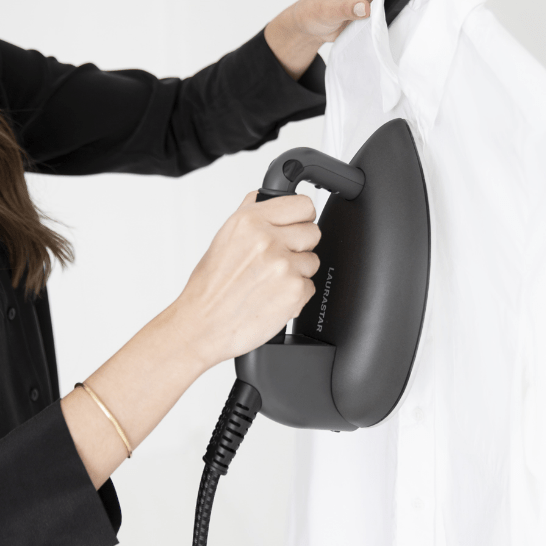
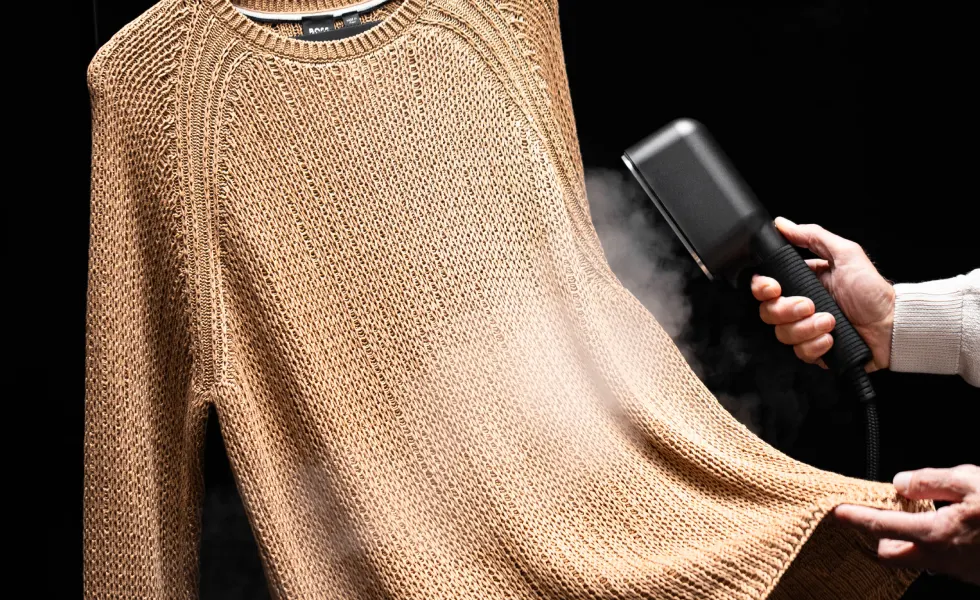
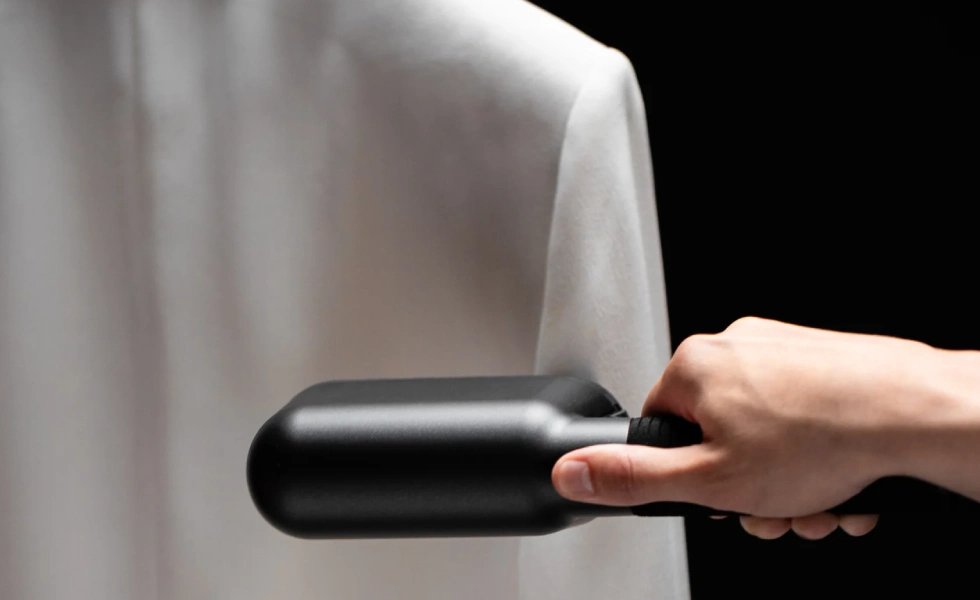
A portable steamer sidesteps most of this. There’s no board needed, no unfamiliar soleplate temperature to guess at, and the technique doesn’t change from one delicate fabric to the next. Laurastar’s IGGI is built specifically for this, compact enough to slip into a suitcase and suitable for cabin luggage, and it works the same way on every fabric: the steam and contact do the work consistently across silk, lace, and chiffon, without switching settings between them.
For hanging garments specifically, work the steamer down the fabric in the direction of the weave, letting the steam and contact release the fold line rather than pressing over it repeatedly. A deep packing crease often needs one full, unhurried pass rather than several rushed ones. If you’re pressed for time, the crease closest to the visible front of the garment is worth prioritising over one that will sit under a jacket or scarf.
Lace needs a different touch to silk
Lace needs a lighter touch mainly because of what’s underneath it, or rather, what isn’t. An open weave has less structure holding it flat, so working in short, even passes matters more here than on a solid weave like silk. Check the care label first if you’re not sure of the fibre content, since a synthetic lace trim will respond differently to heat than a cotton or silk one.
If the lace is layered over another fabric, such as a lace overlay on a lining, steam the two layers as one rather than trying to isolate the lace, since separating them risks pulling at the delicate threads holding the pattern together.
Chiffon rewards patience over pressure
Chiffon rewards patience more than any of the other two. Because puckering comes from uneven moisture settling into such a light weave, working in one continuous direction rather than going back over the same section repeatedly gives the fabric a chance to release evenly. Hanging the garment before you start, rather than working on a flat surface, also helps gravity do some of the work instead of trapping moisture against a board.
Mistakes that undo a good steaming job
A few habits account for most of the disappointing results on delicate travel fabrics.
Steaming straight from the suitcase without hanging the garment first. Gravity does real work in releasing a fold line, and a garment steamed flat on a bed or bench fights that instead of using it.
Working the same spot repeatedly to chase a stubborn crease. On silk this raises scorch and sheen risk, and on chiffon it’s the direct cause of puckering. A second full pass after the fabric has had a moment to settle works better than five rushed passes over one patch.
Assuming every lace trim behaves the same way. Cotton and silk lace tolerate steam well, but some synthetic lace blends are more heat-sensitive, and a care label check takes a few seconds compared with the alternative.
Packing the outfit, you need first at the bottom of the bag. Every layer on top adds its own compression to the crease you’ll be steaming out later, so packing order is worth thinking about before the trip, not fixing after it.
The packing choices that prevent half the damage
The steaming technique matters less if the packing itself set a crease that didn’t need to happen. Rolling silk and chiffon rather than folding them reduces the number of sharp fold lines that need releasing later. Lace travels best flat, protected by a layer of tissue paper or a soft garment on either side, since it’s the fabric most likely to snag against a zipper or a shoe packed in the same section.
Packing the item, you’ll need first towards the top of the bag also means you’re not digging through a full suitcase and adding fresh creases to something you already steamed.
Buying a travel steamer as a gift
A portable steamer is a genuinely useful gift for anyone who travels regularly with silk, lace, or occasion wear, precisely because the alternative is trusting a different hotel iron every trip. Look for something compact enough to pack easily and quick enough to heat up before a flight or an event, since a steamer that takes ten minutes to get going defeats the purpose of a fast pre-event refresh.
Water tank size matters more than it sound like it should. A tiny tank means refilling mid-session, which is exactly the kind of interruption that turns a five-minute refresh into a fifteen-minute one when you’re already running late. A steamer that handles a full outfit, or two, on one fill is worth the slightly larger footprint in a suitcase.
Laurastar’s IGGI is built around the same steam-and-contact approach covered above, so the technique someone learns once carries across silk, lace, chiffon, and the fabrics covered in our guides to caring for cashmere and ironing wool without shrinking or shining it, rather than needing a different approach for every fabric in the bag.
Frequently Asked Questions
Can you steam silk while travelling without an ironing board?
Yes. A hanging garment and a portable steamer worked down the fabric in the direction of the weave releases most travel creases without needing a flat surface at all, which is useful in a hotel room where a board often isn’t available or isn’t reliable.
Is it safe to steam lace?
Generally, yes, though it’s worth checking the care label first, since lace can be made from cotton, silk, or synthetic fibres that respond differently to heat. Working in short, even passes rather than lingering in one spot protects the open weave from distorting.
How do you get wrinkles out of chiffon without an iron?
Hang the garment and steam it in one continuous direction rather than going back over the same section repeatedly. Chiffon’s thinness makes it prone to puckering from uneven moisture, so patience matters more here than pressure or heat.
What should I look for in a travel steamer?
Compact size, a fast heat-up time, and a technique that doesn’t require different settings for different fabrics are the practical essentials, since the whole point of a travel steamer is not having to guess at an unfamiliar hotel iron under time pressure.
How should I pack silk, lace, or chiffon to avoid creasing?
Roll silk and chiffon rather than folding them, since rolling produces fewer sharp fold lines than a folded stack. Pack lace flat with a layer of tissue paper or soft fabric on either side to protect it from snagging on zippers or shoes. Whatever you’ll need first should go in last, closest to the top of the bag, so it isn’t compressed under everything else for the whole trip.
If travel creasing is a recurring problem rather than an occasional one, it’s worth seeing a portable steamer handle silk, lace, or chiffon in person before you buy. Laurastar’s showrooms in Sydney, Melbourne, Brisbane, and Perth run no-obligation demonstrations, and bringing the actual garment that’s given you the most trouble is the fastest way to know if it’ll solve the problem.