Does Your Iron Leave Clothes Wet? Here’s Why Laurastar’s Doesn’t
Most irons leave clothes damp because their steam contains tiny droplets of liquid water, which condense on the fabric as it cools.
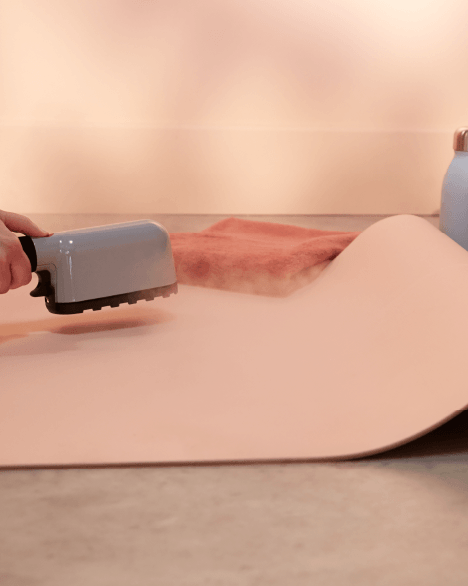
Laurastar’s Dry Microfine Steam (DMS) leaves the appliance fully gaseous, according to Laurastar, so clothes come off the board dry to the touch rather than damp.
Any steam iron, Laurastar included, can release a little condensed water after a break. Pressing the steam button 2 or 3 times away from the fabric before you start clears it.
On any iron, letting it heat fully, using short bursts of steam, ironing on a breathable cover and descaling regularly will reduce wet patches.
At the home shows this year, one question came up at the Laurastar stand more than any other: does it leave clothes wet? People had good reason to ask. Most had pulled a shirt off the board to find a damp collar, or watched their iron spit water across a silk blouse, and they assumed every steam iron does the same.
The short answer is no. Laurastar’s Dry Microfine Steam relaxes fabric without soaking it, so clothes come off the board dry to the touch. The longer answer covers why most irons leave clothes damp, the one moment any steam iron can release a little water, and what you can do to stop wet patches on the iron you already own. Below are the questions that follow on from it, answered properly.
Why does my iron leave clothes wet?
Your iron leaves clothes wet because conventional steam contains liquid water. A standard iron heats water just past boiling point, producing what’s known as saturated steam. As that steam leaves the soleplate and meets cooler fabric, some of it condenses back into droplets, which soak into the surface of the garment and leave it damp.
Engineers describe this using a steam’s “dryness”. Wet steam carries a share of fine water droplets along with the vapour. The wetter the steam, the more water lands on your clothes with every press of the button.
This is how conventional steam works, not a fault in your iron. The steam relaxes the fibres, but it brings moisture with it. On a sturdy cotton shirt, that moisture usually evaporates as you iron. On a heavier garment, a dark fabric or a delicate one, it can stay behind as a damp patch, a water spot or a change in sheen once the fabric dries.
Does a Laurastar leave clothes wet?
No. Laurastar’s Dry Microfine Steam (DMS) is produced by a boiler that superheats water well past its boiling point. According to Laurastar, DMS reaches up to 160°C and leaves the appliance in a 100% gaseous state, with no water in liquid form.
Superheated steam behaves differently from wet steam. Because it’s heated beyond the point where it would condense, it’s far less likely to turn back into droplets when it meets cooler fabric. Instead of settling on the surface, it moves into the fibres, relaxes them and leaves. The garment comes off the board dry to the touch, with no damp collar to wait out.
Because DMS doesn’t depend on a fabric-specific temperature setting, you also avoid the spitting that happens when a conventional iron is asked to steam on a low setting.
“I saw a drop of water at the start. Is that normal?”
Yes, and it’s a fair thing to raise if you’ve seen it happen.
When a steam iron sits between sessions, some steam left in the cord cools and condenses back into water. The next time you press the button, that water comes out first. It isn’t the DMS steam itself, and it happens with any iron or steam station that feeds steam through a cord.
The fix is simple, and it’s what Laurastar’s own instructions recommend. Before you start ironing, or after a long break, press the steam button 2 or 3 times while pointing the iron away from your clothes. That clears the condensation from the cord, and the steam that follows is dry. Laurastar’s customer service FAQ covers this and other everyday questions.
If the soleplate keeps dripping after that, check that the iron’s ready light is on, that the boiler has been rinsed as your manual recommends, and that you’re using the water type your model specifies. If it still drips, Laurastar’s service and repairs team can look at it.
“Will it leave water marks on my silk?”
Water marks on silk come from droplets landing unevenly on the fabric and drying with a visible edge. Because DMS doesn’t carry liquid water onto the fabric, that source of marks is removed, and you don’t need to remember to turn the dial down before you reach a silk blouse.
Purging the cord before you start is most important here, since the first burst after a break is the one most likely to carry condensed water. Our guide on how to iron silk without damaging it covers the full technique.
“Does the ironing board get wet?”
On a standard board, it often does. Steam that passes through the garment hits the cover underneath, and if the cover is thin, coated or worn, the moisture has nowhere to go. It condenses there and soaks back into whatever you iron next.
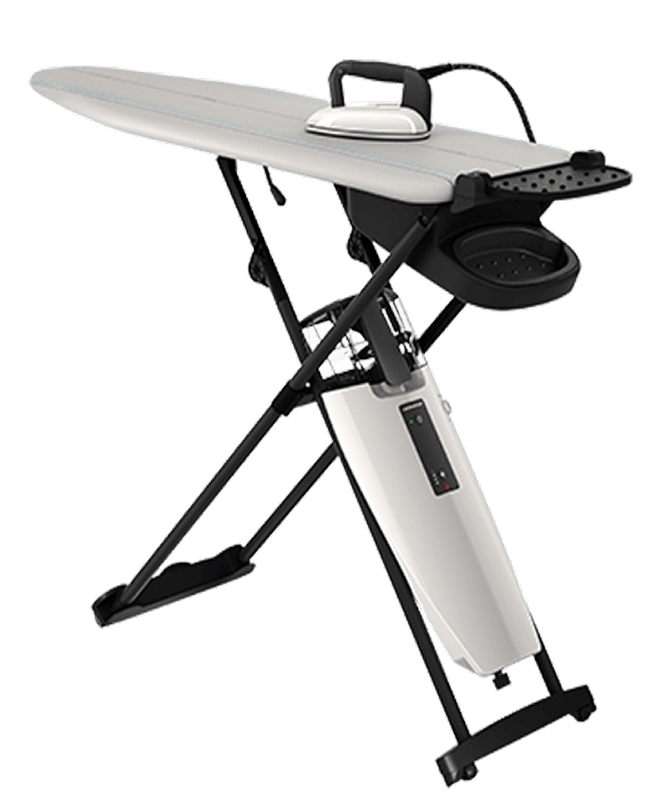
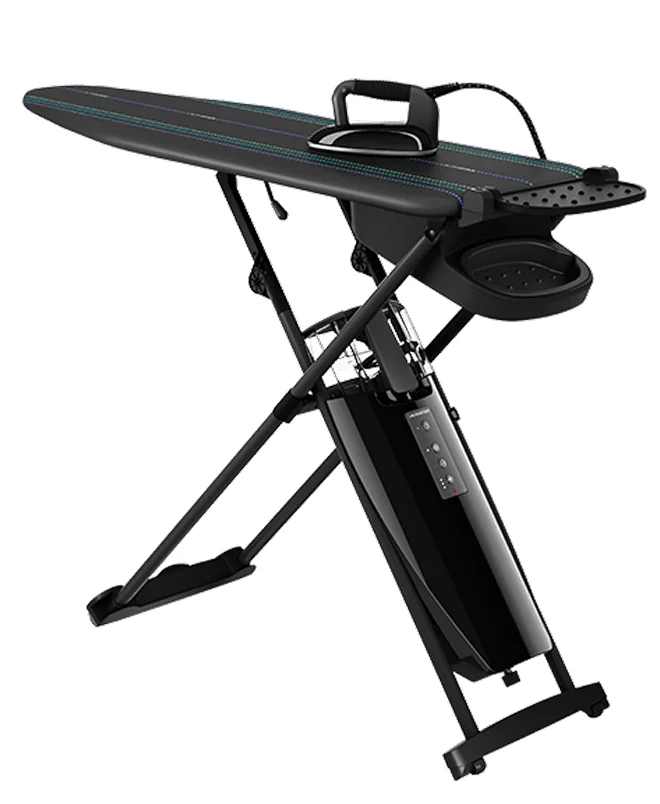
Laurastar’s full ironing systems use an active board designed to deal with this. Its vacuum function draws steam down through the garment and away, and its blower lifts delicate fabrics on a cushion of air. If you use a lot of steam over a long session, some condensation can still build up inside the board, so Laurastar recommends leaving it open to dry before folding it away.
The shirt will be dry, so you won’t be putting on a damp collar. It’s still worth hanging it for a minute or two first. Warm fibres take on creases easily, and letting the shirt cool sets the press so it lasts through the day. Our guide on how to iron a shirt covers the full routine.
How to stop your current iron leaving wet patches
If you’re not ready to replace your iron yet, these fixes help any steam iron or steam station.
Let the iron heat fully. Wait until the ready light changes before using steam, or the water won’t fully convert.
Purge the first shot. Press the steam button 2 or 3 times into the air or onto a towel before you touch the garment.
Use steam only on suitable settings. Most irons can’t produce proper steam on their lowest settings. Iron dry below the level your manual recommends.
Use short bursts. Pulse the steam button instead of holding it down, so the fabric isn’t flooded.
Keep the iron moving. Lingering in one spot concentrates moisture and heat on the same patch.
Finish with a dry pass. After steaming a section, go over it once more without steam to drive off any remaining moisture.
Use a breathable cover. A cotton cover over good padding lets steam through instead of trapping it under the garment.
Descale regularly. Scale disrupts steam flow and causes sputtering, so follow your manufacturer’s descaling instructions, particularly in hard-water areas.
Does steam ironing leave marks?
Steam ironing can leave marks when wet steam meets fabrics that absorb moisture unevenly. Silk, satin, fine wool and dark fabrics are the most affected, with water spots, ring marks or patches of shine where droplets have landed and dried. Scale inside an iron can also spit out as white or brown flecks on dark clothes.
Dry steam removes the main cause, since there are no droplets to land on the fabric. Regular descaling and purging condensation before you start take care of the rest.
Wet steam and dry steam at a glance
Conventional wet steam
Laurastar DMS
Steam leaving the iron
Saturated, carries liquid droplets
Superheated, fully gaseous (per Laurastar)
Where the moisture goes
Onto the fabric surface
Through the fibres and away
Clothes straight off the board
Often damp, need time to air
Dry to the touch
Risk of water spots and shine
Higher on silk, wool and dark fabrics
Low across fabrics
Temperature setting per fabric
Required, and low settings can spit
Not required
Condensation after a break
Yes, purge before ironing
Yes, purge before ironing
Board support
Standard board and cover
Active board with vacuum and blower (ironing systems)
The home shows only come around a few times a year, but you don’t have to wait for one. At a Laurastar showroom in Melbourne, Sydney, Brisbane or Perth, you can bring the garment that always comes off your board damp and watch DMS steam handle it. Run your hand over it straight off the board and judge for yourself. If you can’t get to a showroom, the DMS technology video shows the steam in action.
Frequently asked questions
Why does my iron leave clothes wet?
Most irons produce wet steam that contains tiny droplets of liquid water. As the steam meets cooler fabric, it condenses and leaves the garment damp. Ironing before the iron is fully hot, steaming on low settings and using a non-breathable board cover all make it worse.
Does a Laurastar leave clothes damp?
No. Laurastar’s Dry Microfine Steam leaves the appliance fully gaseous, according to Laurastar, so it relaxes fabric without leaving it damp. Before ironing or after a break, press the steam button 2 or 3 times away from the fabric to clear any condensation from the cord.
Why does my iron spit water?
An iron spits water when the steam isn’t hot enough to stay as vapour. This happens when you use steam before the iron has heated, on a low temperature setting, when condensation has collected in the cord after a break, or when scale has built up inside the iron.
Does steam ironing leave marks?
It can. Wet steam can leave water spots, ring marks or shine on silk, satin, fine wool and dark fabrics, and scale can leave mineral flecks. Dry steam, regular descaling and purging the first burst away from your clothes all reduce the risk.
How do I stop my iron leaving wet patches?
Let the iron heat fully, purge the first burst away from the garment, use steam only on suitable settings, pulse the steam button, keep the iron moving and finish each section with a dry pass. Iron on a breathable cotton cover and descale regularly.
Is it normal for clothes to feel damp after ironing?
With a conventional steam iron, slight dampness straight off the board is common, particularly on heavier fabrics, and should disappear within a few minutes on a hanger. Visible wet patches or water spots point to one of the causes above, such as an iron that isn’t fully hot or a cover that traps steam.
Damp clothes after ironing aren’t something you have to put up with. Better habits will help any iron, and steam that starts out dry removes the problem at its source. If you have one more question before you decide, book a demonstration and bring along the garment that gives you the most trouble.